.png)
Thanks for reading The BlockByte Weekly, where we summarise the key updates in crypto over the last week and provide our perspective on what you need to know as an investor.
Weekly Snapshot
- BTC: US $89,335 (-1.7%)
- ETH: US $3,037 (+1.6%)
- Crypto Market Cap: US $3.01T (-1.3%)
- Gold: US $4,197/oz (+1.0%)
- S&P 500: 6,870 (+0.7%)
- ASX 200: 8,634 (+0.2%)
Executive Summary
- Improving global liquidity conditions and increased likelihood of Fed rate cuts could help drive a market rebound in December according to Coinbase Institutional research
- Despite this, caution remains in the market, with a K-shaped economy driving wealth inequality as job losses mount
- Western Union to launch an inflation adjusted 'stable card' on top of Solana network
- BitMine continues to buy more Ethereum, adding US $199M of Ether to bring their total holdings to US $11.3B of ETH, over 3% of the entire ETH supply
Key Stories this Week
Global Liquidity Could Drive a Santa Rally, but Caution Remains Elevated
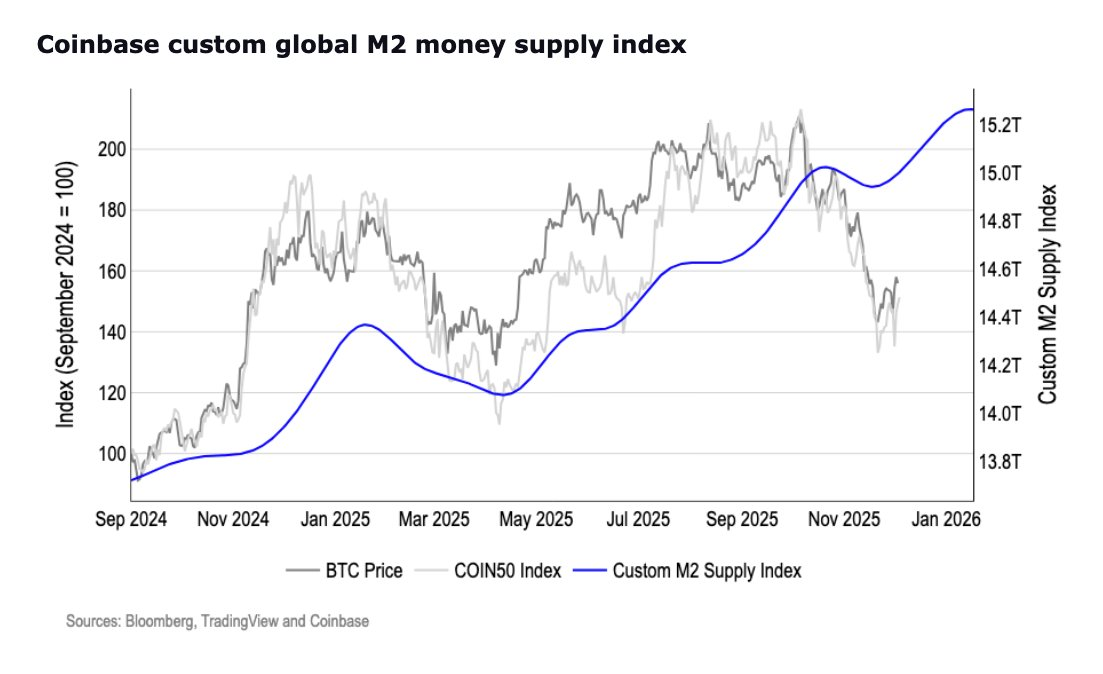
According to the latest Monthly Outlook report by Coinbase Institutional research, December could be set for a crypto rally when looking at global M2 money supply. M2 is a measure which tracks a combination of physical cash and coins (M0), deposits in savings and chequing accounts (M1), plus money market funds and long-term saving deposit accounts (M2). The main line of thinking is that the more money in an economy, the more asset prices tend to rise.
With bitcoin being a good barometer of global liquidity, albeit with a 30-60 day lag, we could see crypto prices recover in the month of December if the correlation with global liquidity holds. Interestingly, the indicator correctly captured much of the downside seen in crypto markets across October and November.
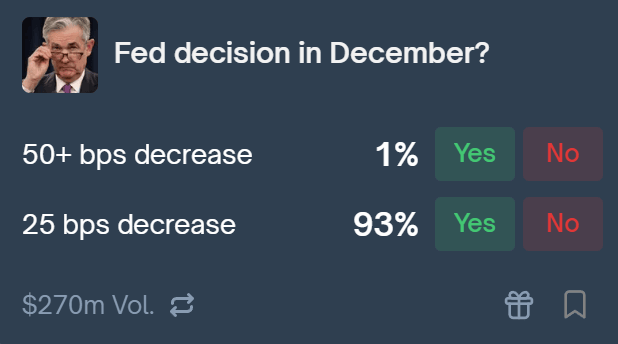
Not yet baked into liquidity is the upcoming decision at the Federal Open Market Committee (FOMC) on December 10th. Twelve FOMC members will decide on whether to increase, cut or keep rates the same. Overwhelmingly, the market is expecting rates to be cut by 25 bps, though this doesn't appear to be enough to excite investors who have remained bearish since the US $19B liquidation event on October 10th.
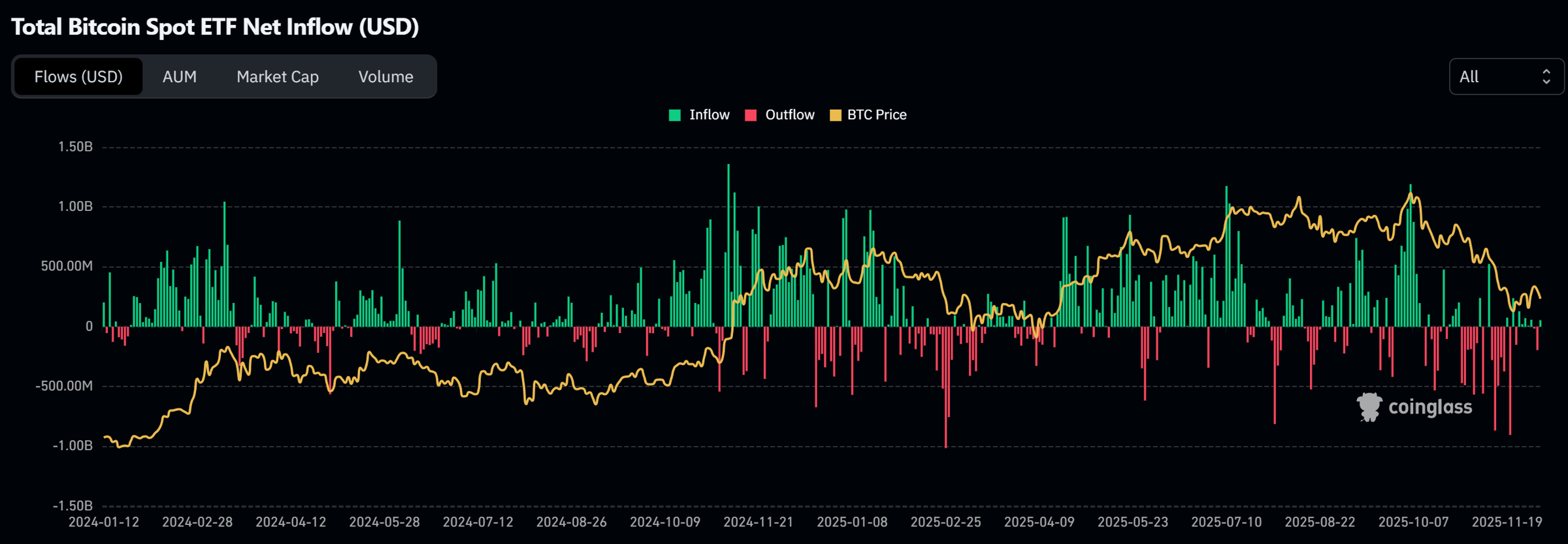
Bitcoin ETF flows are starting to stabilise after several weeks of drawdowns which has dampened price activity. Friday's close saw US $54.8 million of net inflows, brining total bitcoin ETF assets under management (AUM) to ~US $150 billion. XRPs newly launched ETFs have had 2 weeks of positive inflows, with AUM now reaching US $756 million, about 0.5% of the value in bitcoin's ETF, a positive start in a short period of time.
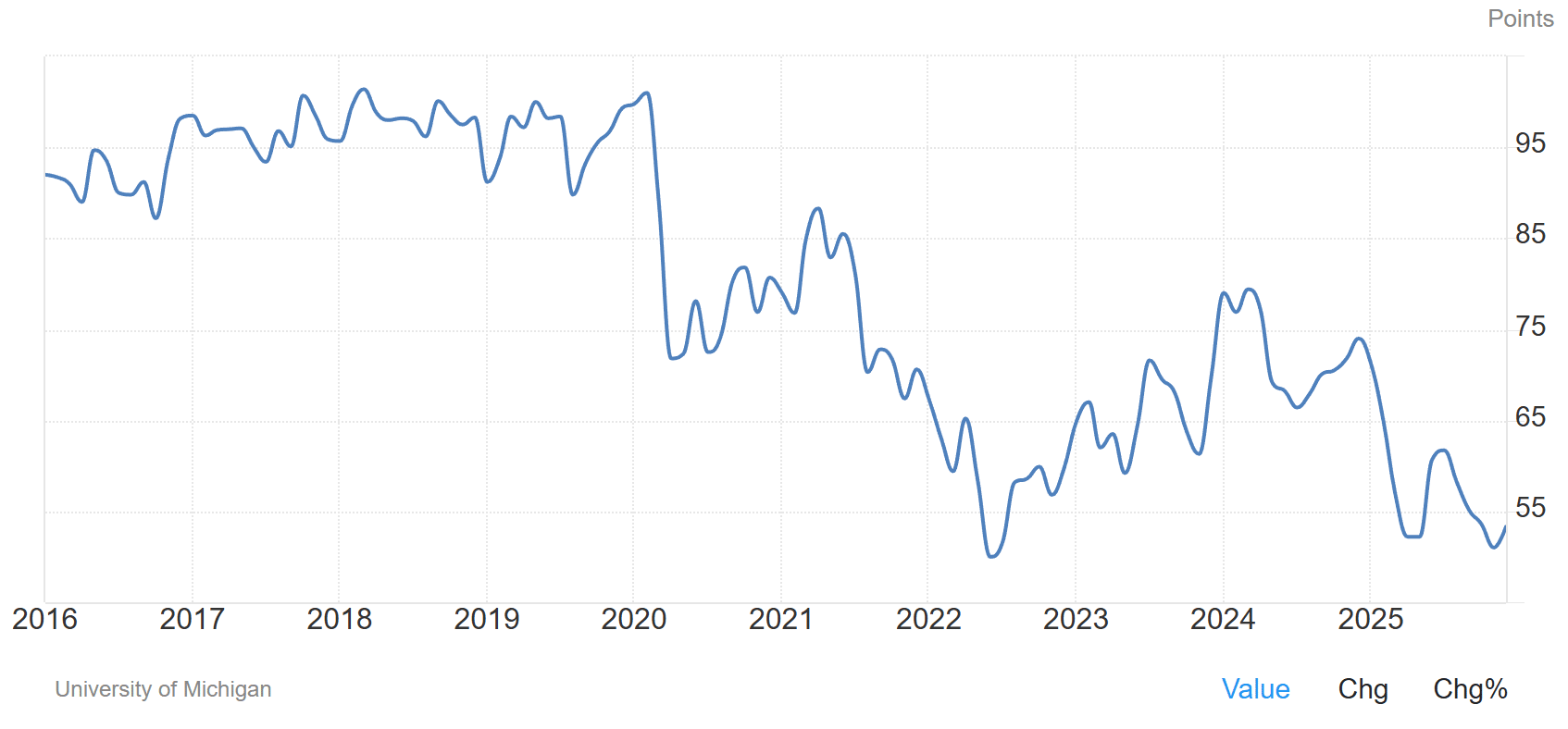
Circling back to broader market sentiment, fear and greed indicators still show that most investors are fearful. Retail investors and in particular, households below median levels of wealth have been hit hardest over the last 5 years as cost of living pressures have mounted. Consumer confidence has plummeted from an index score of 101 to 51 in November, the lowest level in 10 years. December readings have shown an uptick to 53, a small, but positive move.
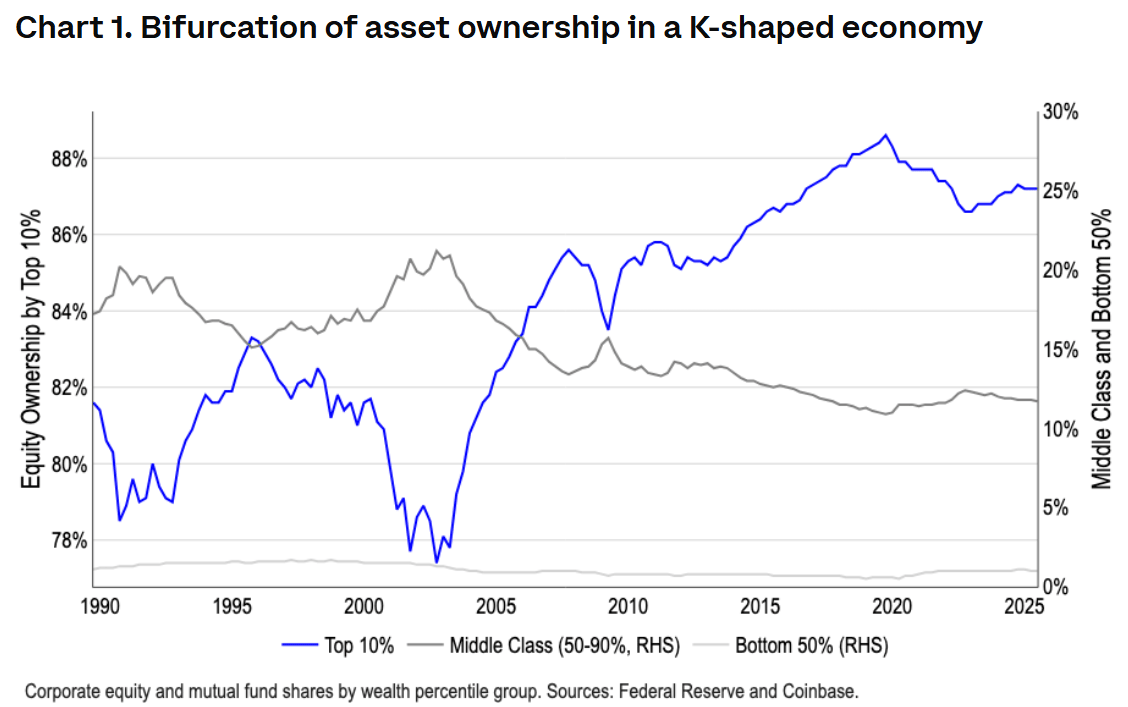
Aligning with the general sense of 'have and have nots', Coinbase produced the following chart which shows growing disparity as the wealthiest 10% of Americans now own 89% of US equities, benefiting from the AI and technology boom. Those in the remaining 90% of the population own just 11% of US stocks.
The implication for crypto asset prices here is that increasingly retail and everyday investors may be getting left behind, and the key drivers of price activity are wealthy individuals and institutional level investors focusing on blue chip assets. Until consumer confidence and spending power returns, we think that smaller altcoins face a long a difficult road to recovery.
Western Union's New "Stable Card"
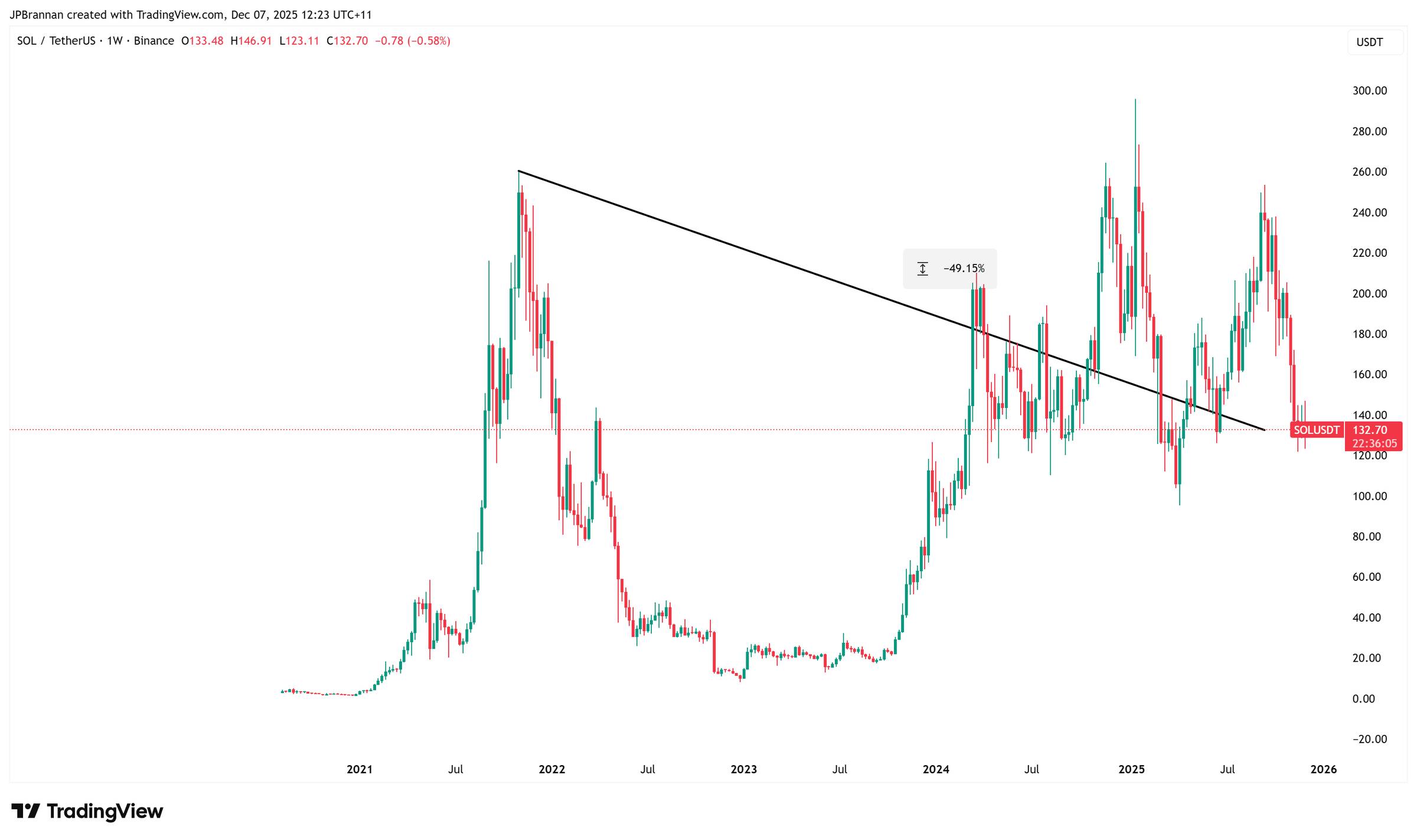
Western Union has announced a plan to launch a “stable card” targeted at users in high-inflation markets. The company pointed to extreme inflation environments (e.g. Argentina) where remittances can lose significant value quickly, arguing the stable card could preserve value for recipients. Western Union plans to launch its Digital Asset Network (DAN) and stablecoin settlement rails built on Solana in early 2026, using its US Dollar Payment Token (USDPT).
The move is some much needed positive news for the Solana investment community. Prices are currently ~49% below the highs seen in November 2021, four years ago. A bitter pill to swallow for the network touted to overtake Ethereum.
BitMine Shows No Sign of Stopping its Ethereum Treasury Strategy
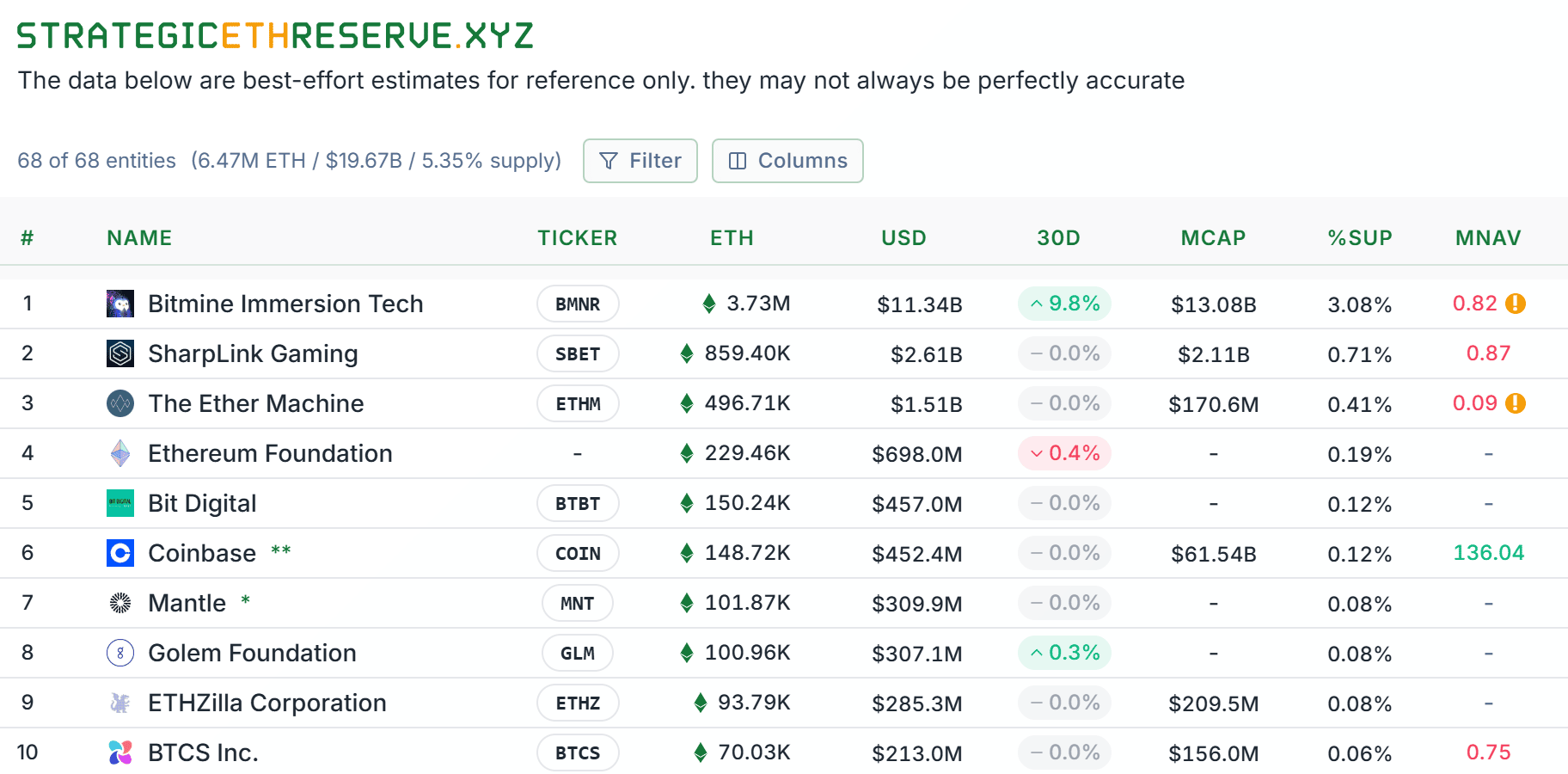
BitMine acquired approximately US $199 million worth of Ether across Friday and Saturday. The firm now controls roughly 3.08% of total ETH supply, getting closer to its target of 5%. Meanwhile, demand for Ethereum ETFs has cooled sharply, with net outflows and a slowdown in corporate treasury ETH buys over recent months.
BitMine’s aggressive accumulation at a time when many institutional flows into ETH are drying up reflects long-term conviction from Tom Lee, CEO of BitMine. Oftentimes the best opportunities arise when going against the market consensus. For now, the company trades at an 18% discount to net asset value. For some investors, that may justify a valuable entry point into BitMine's stock. At BlockByte, we generally avoid digital asset treasury companies and focus on investing in the underlying asset, without the associated equity dilution and bankruptcy risks.
Closing Thoughts
For BlockByte clients, the current investment conditions present tricky to navigate investment and capital preservation options.
On the one hand, improving liquidity conditions and rate cuts often coincide with risk-on sentiment and positive crypto price activity. Importantly, "smart money" and institutional conviction appears to be growing. Examples include: BitMine's conviction in Ethereum as the infrastructure layer of the digital economy; Western Union's move into stablecoins; Vanguard's move to offer clients access to digital assets (US $11 trillion in AUM) as well as Bank of America recently enabling its 15,000+ advisors that oversee US $4.6 trillion in assets to recommend up to a 4% allocation to digital assets in client portfolios.
On the other hand, consumer confidence is the lowest seen in a decade as cost of living pressures and inflation has ravaged the average household. Wealth inequality has widened between the haves and the have nots, limiting investmet participation from a large portion of the middle and lower income population.
In current market conditions, we maintain a cautious but optimistic outlook. Dollar-cost-averaging (DCA) strategies can serve investors well when looking to minimise single event drawdowns while capitalising on depressed price activity during this period. Looking out across 2026 and beyond, we think that the tailwinds far outweigh the headwinds as liquidity and macro conditions improve and institutional adoption drives market activity.
Until next week,
James
James Brannan
Managing Director
BlockByte
Sign up to receive the latest crypto trends, insights, and news.
.png)