.png)
Weekly Snapshot
- BTC: US $67,000 (+0.4%)
- ETH: US $1,968 (-0.2%)
- Crypto Market Cap: US $2.31T (+0.9%)
- Gold: US $5,106/oz (-5.1%)
- S&P 500: 6,740 (-2.0%)
- ASX 200: 8,851 (-3.8%)
Executive Summary
- The U.S.-Iran war has suspended roughly a fifth of global crude oil supply and pushed oil above US $85 a barrel, creating an energy shock that is now filtering into every asset class, from equities to crypto.
- Bitcoin touched US $74,000 mid-week on a short squeeze and US $569 million in ETF inflows before retreating to US $67,000 as a surging dollar and 43% of supply sitting at a loss created persistent selling pressure on rallies.
- Kraken became the first crypto firm granted a Federal Reserve master account, gaining direct access to Fedwire and marking the most significant structural integration of digital assets into the U.S. financial system to date.
Bitcoin & The Double-Edged Sword of War
The U.S. - Israel conflict with Iran entered its second week with no resolution in sight, triggering what is now the most significant energy supply disruption since Russia's invasion of Ukraine. Iran's targeting of ships in the Strait of Hormuz, along with drone attacks on regional energy infrastructure, has forced the suspension of approximately a fifth of global crude and natural gas supply, according to Reuters.
Daily Tankers Passing Through Strait of Hormuz
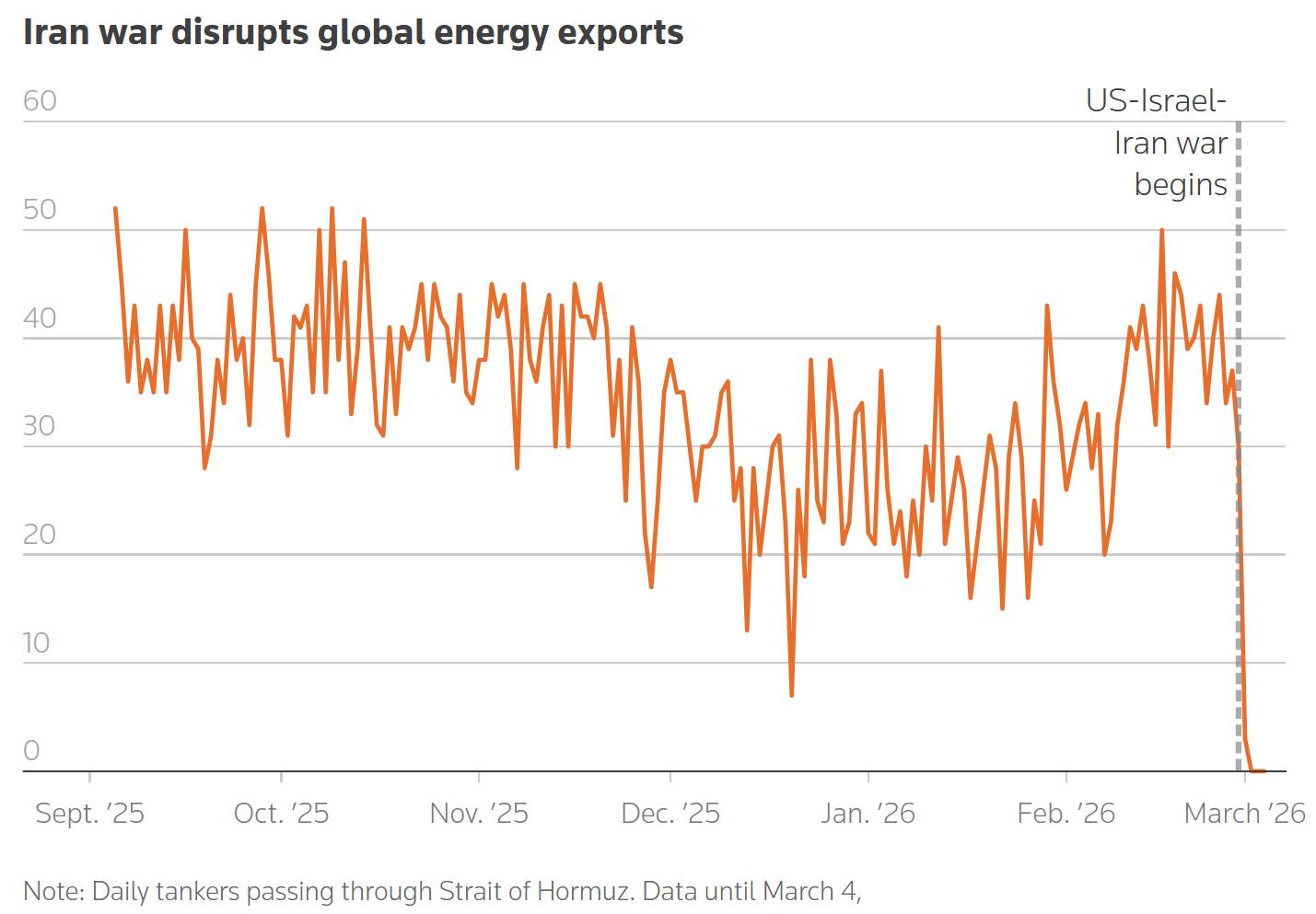
Oil surged more than 28% since the war began, with Brent crude topping US $85 a barrel. Qatar declared force majeure on its liquefied natural gas exports after Iranian drone strikes, while Saudi Aramco's Ras Tanura refinery shut down due to attacks. U.S. retail petrol prices jumped 34 cents in a single week to US $3.32 a gallon, creating a direct political headwind for the Trump administration ahead of November's midterm elections.
Oil & Bitcoin Price Change for the Week (%)
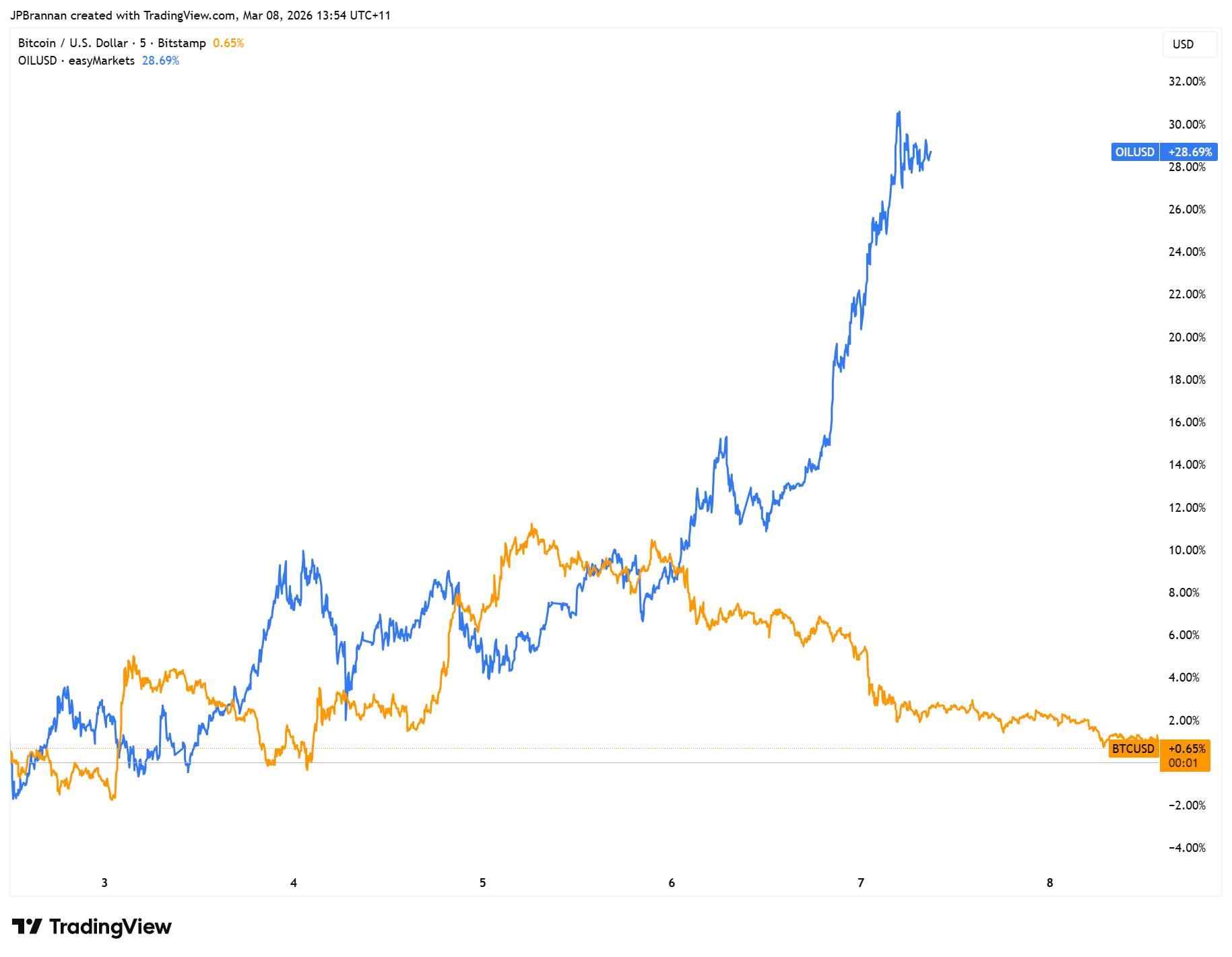
Implications for investors
Energy shocks of this magnitude tend to force central banks into a binary choice: fight inflation or support growth. Arthur Hayes argued this week that the historical pattern from the Gulf War to post-9/11 is clear; prolonged military spending expands the money supply, which has been fuel for bitcoin.
However, what makes things unclear is that near-term the U.S. dollar posted its steepest weekly gain in a year as markets priced in stickier inflation and fewer rate cuts, which is a direct headwind for all risk assets. How bitcoin and digital assets perform over the coming weeks will largely depend on how severely the oil crisis impacts inflation and central bank policy. A rising rate environment could create further risk-off investor behaviour. However, if the US-Iran conflict alleviates, investors may shift back to risk-on as inflation falls.
ETF Flows Turn Positive, But 43% of Bitcoin Held is at a Loss
Bitcoin surged to US $74,000 on Wednesday, its highest level in a month, before giving back the entire move to close the week near US $67,000. The initial rally was driven by a combination of a massive short squeeze, with five consecutive red months leaving the market heavily short-positioned. ETFs pulled in US $1.14B in the first 3 days of the week followed by a combined US $577M in outflows on Thursday and Friday. Still, ETF flows closed the week with US $569M in net inflows.
Bitcoin ETF Flows (Mon-Fri)
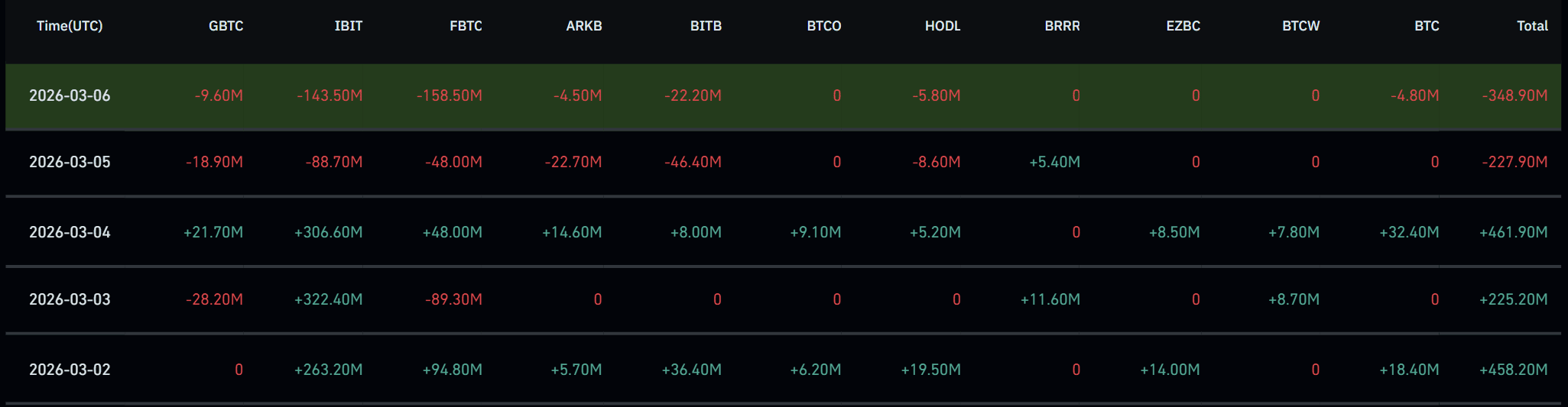
Polymarket showed 62% of participants still expecting BTC below US $50,000 this year, and the Fear & Greed Index sank back to 18, firmly in "extreme fear" territory according to CoinMarketCap. Glassnode data revealed that 43% of bitcoin's total supply is now sitting at a loss, creating a significant overhang of sellers waiting to break even on any rally.
Implications for investors
The round trip from US $68,000 to US $74,000 and back is becoming a familiar pattern but no sustained buying conviction follows through. The 43% of supply underwater is the statistic that matters most here. Every push toward higher prices runs into a wall of holders who have been waiting months to exit, creating persistent resistance to sustained upside price momentum. Until oil prices stabilise and the market has some clarity around how severely inflation could re-emerge, then expect volatility ahead.
Kraken Wins Fed Master Account, Rewriting Crypto's Banking Playbook
Kraken Financial was granted a limited-purpose master account by the Federal Reserve Bank of Kansas City this week, becoming the first digital asset firm with direct access to the U.S. payments backbone. The approval gives Kraken access to Fedwire (the Fed's core real-time gross settlement system) under a "Tier 3" classification with a one-year initial term and restrictions tailored to its risk profile.
Senator Cynthia Lummis called it a "watershed milestone in the history of digital assets." The move arrives alongside a separate 60-day Fed public comment period on a proposed rule that would permanently remove "reputation risk" as a factor in bank supervision, the mechanism widely believed to have been used to cut crypto firms off from banking services.
Implications for investors
This development represents the most significant structural shift in crypto's relationship with the traditional financial system since the launch of spot Bitcoin ETFs. Direct Fedwire access means crypto is well and truly being integrated into the financial backbone of the central banks. This is an unprecedented shift in how government has treated crypto compared to prior years, and is fundamentally consutructive for our long-term investment outlook for the sector, despite the short-term headwinds that remain.
Final thoughts
Investors looking at allocating to the market during these periods can benefit from dollar-cost-average strategies to avoid the large drawdown potential of lump sum investing. With that said, as the market is currently ~45% below the highs, we lean towards an accumulation bias at current price levels.
Until next week,
James
Sign up to receive the latest crypto trends, insights, and news.
.png)