.png)
Thanks for reading The BlockByte Weekly, where we summarise the key updates in crypto over the last week and provide our perspective on what you need to know as an investor.
Weekly Snapshot
- BTC: US $85,237 (-10.8%)
- ETH: US $2,781 (-12.2%)
- Crypto Market Cap: US $2.88T (-10.1%)
- Gold: US $4,064/oz (-2.5%)
- S&P 500: 6,602 (-1.0%)
- ASX 200: 8,417 (-3.9%)
Key Stories This Week
Executive Summary
- Markets across asset classes continued their slide lower this week, crypto appears to be the worst impacted driven by broader macro uncertainty and constrained liquidity following a key October 10th liquidation event
- While we see bearish conditions in crypto, that isn't yet reflected in the equity market to a similar extent, leading us to question whether this is actually a macro driven pullback or more specifically a crypto liquidity crunch
- Japan's recent stimulus package has fueled bond selling and soaring yields, triggering concerns over another Yen carry trade unwind scenario which previously sent Bitcoin tumbling 17% in one day in 2024
- The US lacks available labour market information to make an informed interest rate decision on December 9th
- Quantum computing is a growing threat to all blockchain's encryption security
- Despite the near-term liquidity squeeze and macro uncertainty, 2026 looks set to be a year of falling rates, improved liquidity conditions and continued productivity gains on the back of AI technology
- Our mid to long-term outlook for digital assets is stronger at these levels following a pullback, we continue to be steadfast in adding to positions at these levels, not exiting
Crypto Specific Liquidity Crunch
Crypto markets continued their slide lower over the last week. From the highs in October, Bitcoin is down -33%, with major altcoins like ETH, XRP and SOL also down -44% to -57% from their all-time highs.
For popular smaller cap tokens like Chainlink, Sui and Cardano, their prices are between -75% and -90% from their tops indicating that the bear market is well and truly here if you've been holding altcoins.
Several factors have led to extreme levels of fear amongst investors which all started on October 10th when the largest ever liquidation event in crypto markets took place. US $19B in leverage was wiped out in 24-hours following Trump's threat to escalate Chinese tariffs to 100%. This followed China's decision to limit exports of specific rare earths and processed materials used in advanced technologies.

If you know how an order book works, investors place various quantities of buy and sell orders at different price points, however, when a lot of the orders are synthetic (leveraged), then liquidity can disappear very quickly during liquidations.
Consequently, it takes less selling or buying volume to significantly move price - which is further amplified to the downside during periods of economic uncertainty. We believe this is the main driver of downward price activity.
The AI Investing Bubble
More broadly, we've seen a confluence of macro conditions add additional fear into crypto markets, with investors and economists like Ray Dalio and Howard Marks saying that we are in an AI and investing bubble. Many investors seem to have agreed with that narrative, and sold crypto in expectation of further equity and tech sector pullbacks.
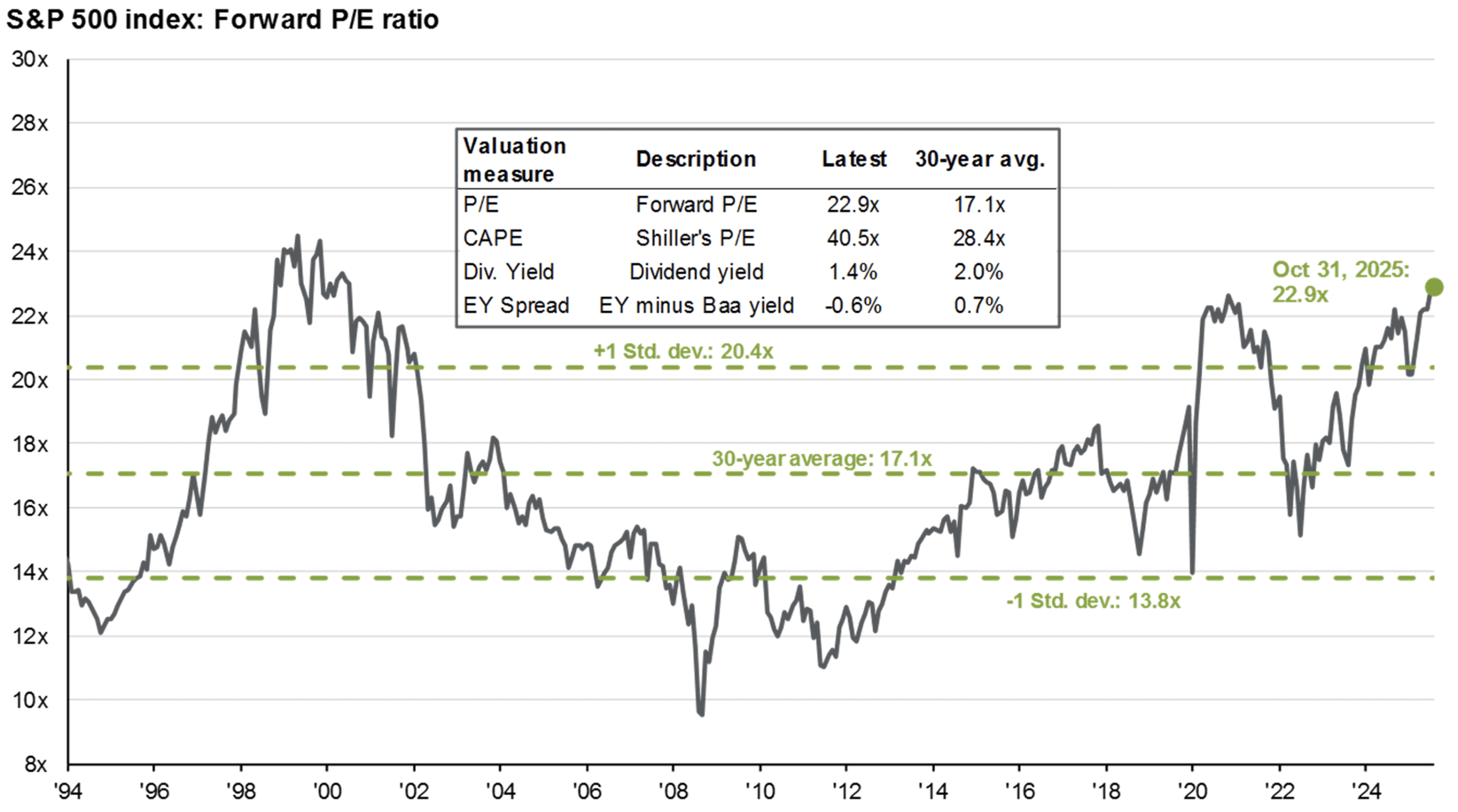
The sense of overvaluation is exemplified when looking at some anecdotes such as Palantir's 400 P/E ratio and overall S&P forward looking PE ratios (22.9) appearing to be more than one standard deviation above 30-year historical norms (17.1) according to JP Morgan.
However, earnings from AI giants like Nvidia have continued to demonstrate resilience and growing demand, despite claims of circular revenues with players within the AI ecosystem.
A Potential Yen Carry Trade Unwind
In addition, a weakening Japanese Yen and soaring bond yields have re-ignited talk of a Yen carry trade unwind. The last unwind happened back in August of 2024 where Bitcoin fell as much as 17% in a single day and the equity markets fell by 3%-5%. This happens when the cost to borrow Japanese Yen increases either because the Bank of Japan lifts interest rates, or because bond holders don't want to hold a weakening Yen and demand more yield.
Recently, new Japanese Prime Minister, SenaeTakaichi, unveiled a US $120B stimulus package to promote economic growth, even while inflation is above their 2% target range which is causing bond holders to sell and yields to spike.
The implication here is that many foreign nations and large institutional entities borrow Yen at low interest rates. When the Yen appreciates or interest rates rise, it significantly impacts their cost of capital, in some cases triggering mass selling of assets (e.g., US equities and crypto) in order to pay off outstanding Yen based debts.
The US Government Shutdown
Without regurgitating last week's news, the US recently came out of its government shutdown period where 1.4m government workers were furloughed and only recently back-paid.
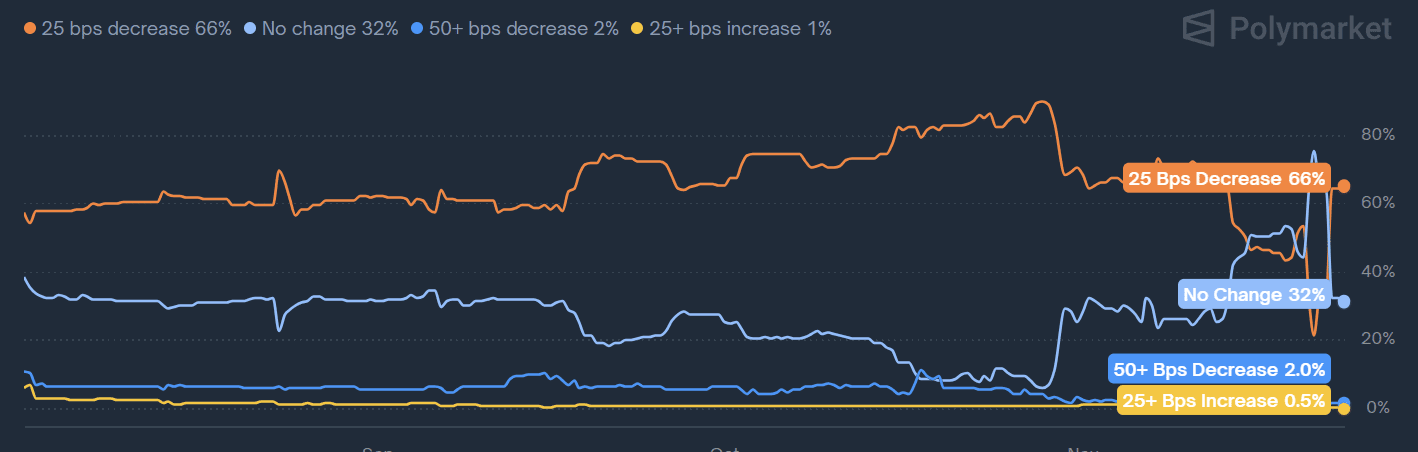
This disruption has also meant that key data including October figures for unemployment and job creation will not be released, obscuring the Fed's ability to make an informed interest rate decision. Odds on Polymarket of a 25 bps rate cut have swung wildly from 90%, to 20% to 66% in recent weeks, underscoring the level of unpredictability.
The Quantum Conundrum
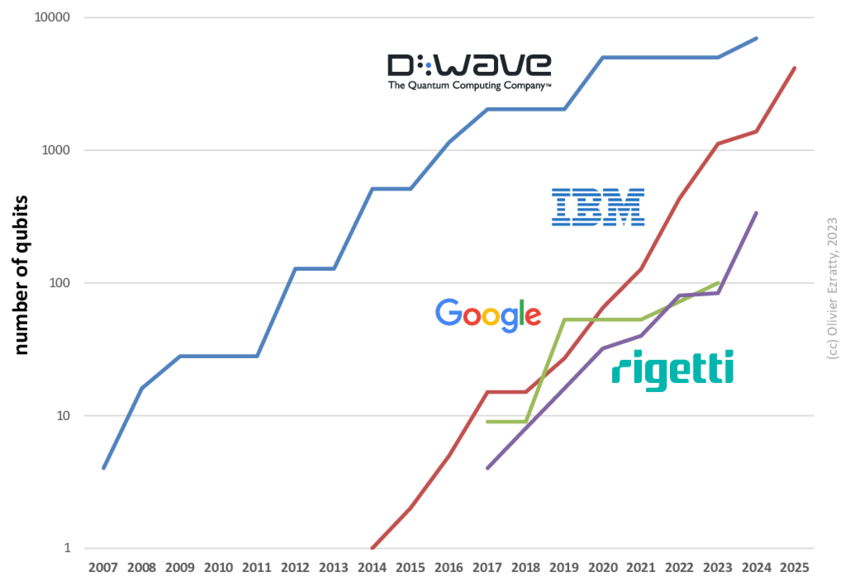
Perhaps the final layer of uncertainty for crypto investors right now is the renewed debate around quantum computing and its long-term implications for blockchain security. Recent research from IBM, Google, and Quantinuum has shown that prototype quantum processors have achieved stable qubit counts between 1,000 – 1,500, with logical qubit error correction improving faster than previously expected.
While these machines are far from being able to run at the scale needed to break elliptic-curve cryptography (ECC), experts estimate that a quantum computer with roughly 10 million stable qubits could theoretically crack Bitcoin’s ECDSA signatures, potentially within a decade if progress continues at current rates.
The National Institute of Standards and Technology (NIST) believe crypto networks still have a multi-year buffer before quantum threats become actionable. NIST’s Post-Quantum Cryptography (PQC) standardisation effort, due for implementation around 2026-2027, will likely define the next generation of secure algorithms and should give some investors at least a little peace of mind.
Conclusion
In spite of all the turbulence, the current environment looks far more like a liquidity-driven reset than a structural breakdown in crypto’s long-term fundamentals. The combination of forced deleveraging, missing macro data, and cross-asset risk aversion has created outsized volatility but not a deterioration in the underlying investment case for Bitcoin, Ethereum, or the broader digital asset ecosystem.
Looking ahead, the broader 2026 macro landscape still appears constructive. UBS’ latest Year Ahead 2026 report highlights a world moving toward lower rates, a rebound in global liquidity, and sustained productivity gains driven by AI infrastructure spending. If that outlook holds, the conditions that have weighed on crypto over the past several months, tight liquidity, elevated yields, and risk-off sentiment should progressively ease.
For investors able to look beyond the near-term noise, the setup remains favourable: improving monetary conditions, secular adoption trends, rising institutional participation, and an accelerating technology cycle. Volatility may persist, but the medium-term backdrop is strengthening, not weakening.
Until next week,
James
James Brannan
Managing Director, BlockByte
Sign up to receive the latest crypto trends, insights, and news.
.png)