.png)
Thanks for reading The BlockByte Weekly, where we summarise the key updates in crypto over the last week and provide our perspective on what you need to know as an investor.
Weekly Snapshot
- BTC: US $90,811 (+6.7%)
- ETH: US $2,990 (+8.0%)
- Crypto Market Cap: US $3.05T (+6.3%)
- Gold: US $4,218/oz (+3.5%)
- S&P 500: 6,849 (+4.5%)
- ASX 200: 8,614 (+0.7%)
Executive Summary
- Crypto, stocks, commodities and bond markets all ralied over the last week in an 'everything bounce'. The main driver appears to be the high likelihood of a rate cut in December, renewed AI optimism as well as institutional capital inflows.
- Bitcoin and Ether rallied by 7-8% as ETFs recorded their first positive weekly net inflows in over a month, however, small altcoins lagged - reflecting cautious market sentiment.
- Front-runner for the new Fed Chair position, Kevin Hassett, has strong crypto ties and favours lower interest rates, lower taxes and deregulation to grow America's way out of economic trouble, spurring positive 2026 market expectations.
- Bitcoin could be set for significant capital inflows if the SEC approves a Bitcoin-backed bond product filed by JP Morgan and likely to be copied by other institutional banks, unlocking a US $318T bond market opportunity.
Key Stories This Week
Markets Roar Back as Rate-Cut Bets Dominate
Markets across asset classes delivered one of their strongest weeks of 2025 as investors pushed aside months of caution. We wrote about the importance of 'time in' the market vs 'timing' last week. The S&P 500 surged 4.5%, its best week in six months. Fueling the market rally was the debut of Google’s new flagship AI model, which saw Google shares spike 8% for the week, reinvigorating enthusiasm across the technology sector.
Bond prices also surged as yields fell, indicating more bond investors were looking to buy now to lock in current yields before they potentially fall if the Fed cuts rates in December. Commodities like gold (+3.5%) and silver (+11.3%) had significant gains, despite the largest derivatives marketplace, CME, going offline for 11 hours on Thursday due to a server cooling issue. The shutdown was a good reminder as to why decentralised blockchains like Bitcoin offer superior characteristics for digital ledgers and money that shouldn't have a single point of failure.
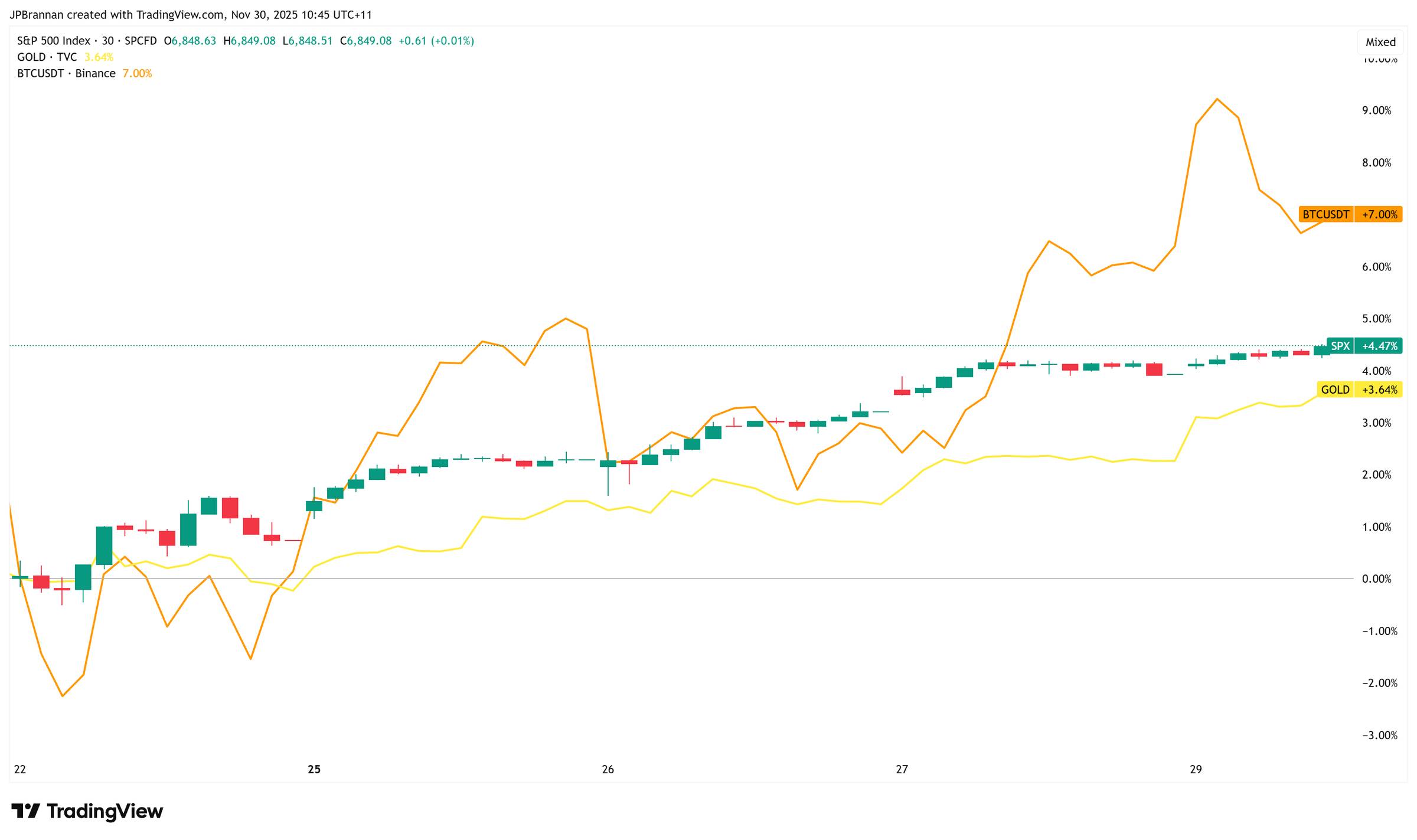
Bitcoin joined the risk-on surge, now up more than 12.8% from its November low of around US $80,000 to trade around US $90,811. Ether (+8%) and XRP (+12.3%) also had strong weeks. Notably, while blue-chip digital assets have rebounded, many altcoins remain deep in drawdown territory down 30-60% from their mid-year highs as liquidity continues to concentrate in the top layer of the market.
From our perspective, while we think there's significant upside in some altcoins, it's increasingly concentrating into the chains which demonstrate genuine user growth and volume. We're leaving behind the phase of meme coin mania and tokens based on promise but without the evidence to back it up.
Bitcoin ETFs Turn Positive, BlackRock Tops the Leaderboard
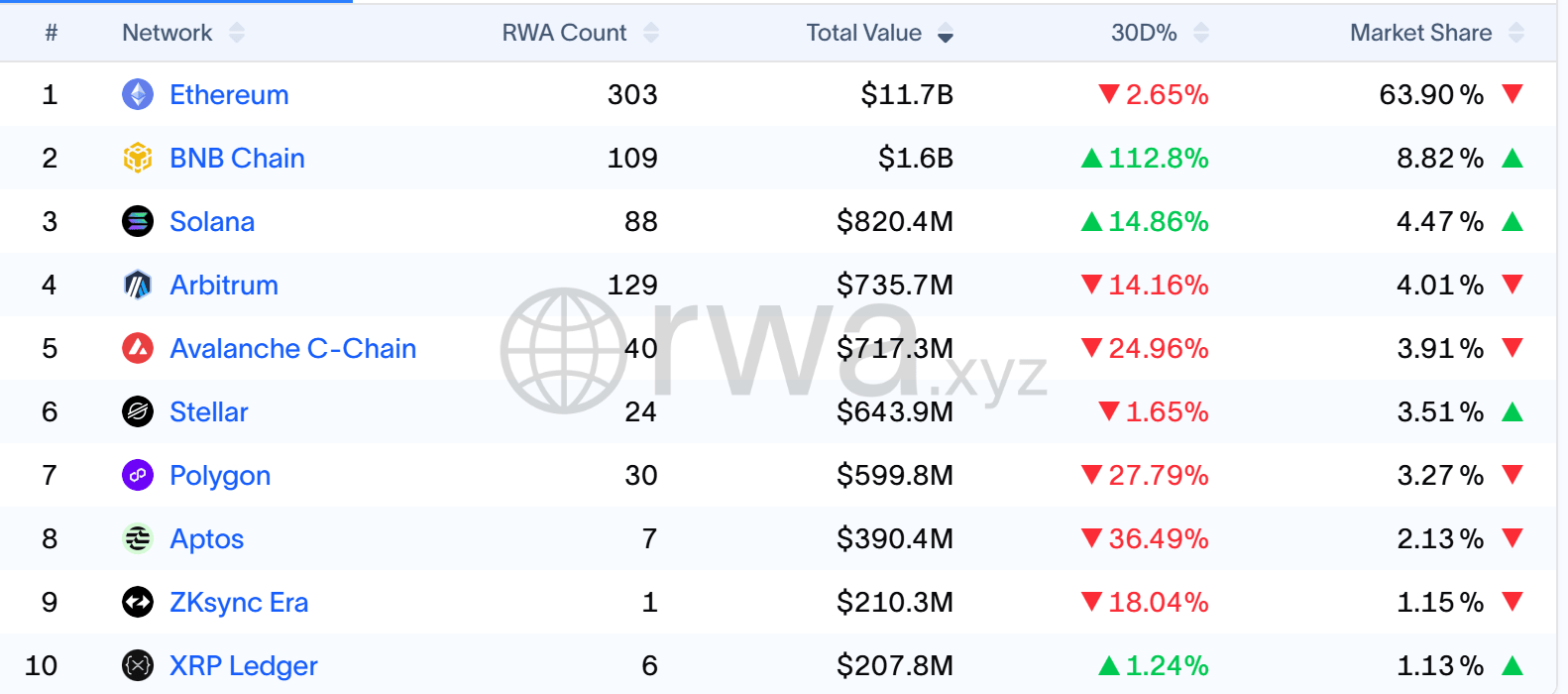
After a month of heavy redemptions, negative institutional sentiment toward crypto showed its first signs of easing. U.S. spot Bitcoin ETFs logged roughly US $70 million in net inflows for the week, while Ethereum ETFs drew more than US $312 million, the first combined positive flows since October. The Ethereum narrative continues to grow as the blockchain of choice for building the future rails of tokenised real-world assets.
Real World Asset Tokenisation by Market Share (excluding stablecoins)
Back to ETFs, BlackRock's Bitcoin ETF, IBIT, has quietly become the firm’s most profitable product line a remarkable outcome for the world’s largest asset manager with US $13.4 trillion AUM. IBIT now holds over 3% of Bitcoin’s total supply, managing roughly US $70 billion in assets and generating an estimated US $245 million in annual fees. BlackRock increased their BTC portfolio allocation by 14% into their strategic income fund during the recent pullback.
Why the New Fed Chair Could Drive Markets in 2026
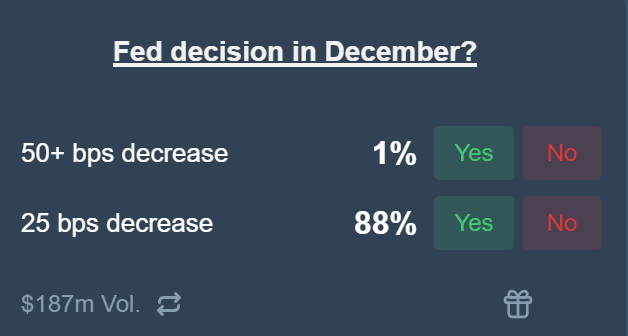
Looking ahead, the setup for 2026 could mark a structural turning point for digital assets. The emergence of Kevin Hassett as front-runner for the next Federal Reserve Chair has reinforced expectations that the Fed’s posture will turn decisively dovish (rate cuts more likely). Markets now price nearly 90% odds of a rate cut in December, with further easing likely in early 2026.
Hassett is a long-time advocate of tax cuts, deregulation, and pro-growth supply-side economics. In his time as a scholar and policy adviser, he argued that lower taxes and lighter regulation would spur investment and economic growth. Hassett is also one of the most crypto-friendly top U.S. economic policymakers. A few areas he has worked on:
- He helped lead the White House “digital asset working group,” which released a report earlier this year laying out regulatory recommendations for crypto
- He disclosed a personal investment in the U.S. exchange Coinbase of at least US$1 million.
- He also served on Coinbase’s “Academic & Regulatory Advisory Council,” indicating active engagement in shaping regulatory thinking for exchanges / crypto markets.
A new Fed leadership, combined with slowing U.S. labour-market data, suggests the coming year may usher in a regime of easing liquidity conditions, providing fertile ground for risk assets, from equities to crypto.
From our point of view, the main thing complicating the picture are political dynamics and social divide. The U.S. mid-term elections (Nov 2026) are expected to inject uncertainty if Democrats gain additional foothold in Congress, potentially delaying key policies for digital-asset regulation that have not been passed. With that said, we think its far enough away that significant progress will likely already have been made before the mid-term elections with the passing of the market structure bill for digital assets expected to be signed early next year.
Bitcoin's Move into the US $318 Trillion Debt Market
JP Morgan has filed an application to the SEC to launch a new Bitcoin-backed bond, or more technically called a structured note. The note is built on BlackRock’s Bitcoin ETF and gives institutions a familiar way to access Bitcoin with some downside protection.
Summary Table of How it Works
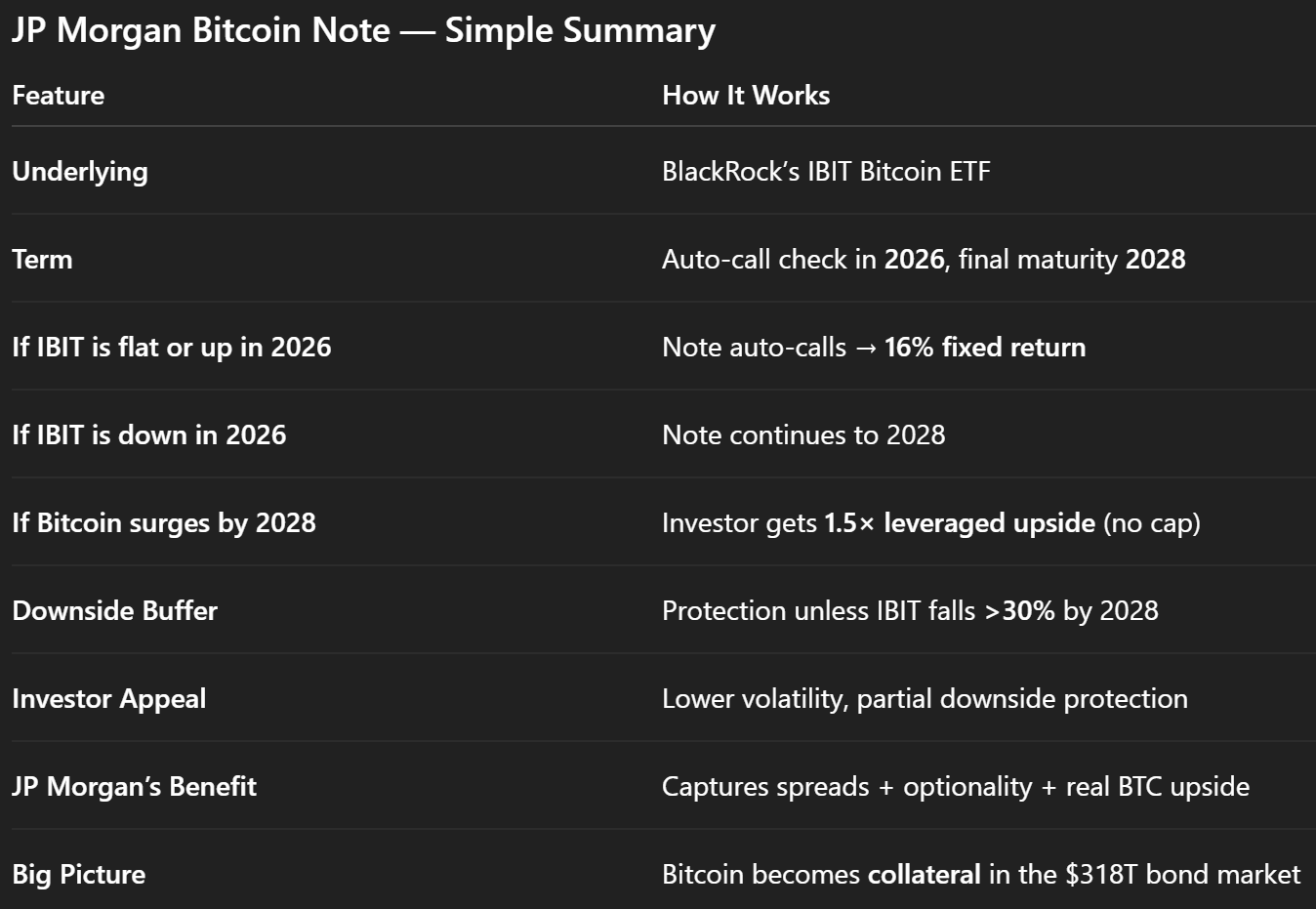
The significance of this is far bigger than the product itself. JP Morgan is a globally systemically important bank (G-SIB for short). By issuing Bitcoin-linked debt and now accepting Bitcoin as loan collateral, Bitcoin is entering the global fixed income market. Even small allocations become seismic at scale: if just 1% of the $318T bond market flows into these structures, the implied Bitcoin price increase is ~US$159k; at 3%, it's US$478k; and at 7% (a typical alternatives allocation), ~US$1.1m per BTC.
We think this is just the beginning of a fixed-income ecosystem forming around Bitcoin. With copycats from Morgan Stanley, Citi, Goldman and UBS likely to follow.
JP Morgan spent a decade criticising Bitcoin. Now it’s monetising it because the fee opportunity is too large to ignore. Bitcoin is no longer a fringe asset; it is becoming collateral. And once the bond market builds around an asset, it rarely reverses.
Watch this video by Joe Consorti for a full explainer:
Until next week,
James
James Brannan
Managing Director
BlockByte
Sign up to receive the latest crypto trends, insights, and news.
.png)