.png)
Weekly Snapshot
- BTC: US $71,594 (+6.9%)
- ETH: US $2,213 (+8.4%)
- Crypto Market Cap: US $2.41T (+5.6%)
- Gold: US $4,713/oz (+2.5%)
- S&P 500: 6,817 (+6.2%)
- ASX 200: 8,960 (+2.7%)
- WTI Oil (newly added to the newsletter): US $90/bbl (-10.0%)
Executive Summary
- After oil prices fell by more than 10% on the week on positive sentiment surrounding the US-Iran ceasefire, recent US-Iran peace talks collapsed after 21 hours in negotiation. Iran appears unwilling to compromise on stopping its nuclear ambitions according to Vice President JD Vance. Looking to Hyperliquid, a decentralised crypto exchange, oil futures are now pointing towards a US $94 / barrel - highlighting the advantages of markets trading 24/7 on crypto rails.
- Two independent Bitcoin developers shipped working quantum-resistant prototypes that function without any protocol upgrade, as Google research suggests the threat window may be as close as three to five years. The move signals an important step towards renewed investor confidence in bitcoin's long-term security.
- Bittensor's TAO crashed 23% after Covenant AI, one of its largest subnet operators, publicly exited the network, accused the founder of centralised control, and sold roughly 37,000 TAO worth US $10M into the market. Despite the pullback, new ETF's including Grayscale plan to bring TAO to the traditional investor market. Demand for decentralised and cheaper methods to train AI models is also growing, so we remain constructive on TAO's potential with a longer-term view.
US-Iran Peace Talks Fail After 21 Hours of Negotiation, Iran Demands Bitcoin For Safe Passage of Ships
Vice President JD Vance announced early Sunday that 21 hours of face-to-face talks with Iran ended without a deal. The key sticking point was Iran's refusal to commit to not pursuing nuclear weapons. It was the highest-level direct meeting between the US and Iran in 47 years.
Pakistan's foreign minister characterised the sessions as "intense and constructive" and urged both sides to maintain the ceasefire, but Iran's state media blamed "excessive demands" for the breakdown. The two-week ceasefire, announced on 7 April, remains in place for now, though Israeli strikes on more than 200 Hezbollah targets in Lebanon and Iran's continued control of the Strait of Hormuz are straining its foundations.
Meanwhile, according to a recent Financial Times article, Iran is purported to be allowing some oil tankers to pass though the strait, demanding ~US $2 million payable in bitcoin per ship. We cover why they're asking for bitcoin and not other cryptocurrencies in the video below:
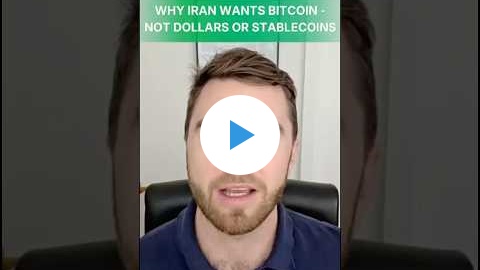
Iran is using bitcoin for exactly the use case sceptics warned about: sanctions evasion. However, it also proves bitcoin functions as neutral settlement infrastructure when hostilities between nations emerge. Other forms of digital currencies such as stablecoins, Solana, XRP etc. can be frozen and sanctioned by the companies that run the network - positioning bitcoin uniquely as global, digital, neutral money.
Another area we're focusing on is decentralised exchanges. Hyperliquid, the largest of decentralised exchange, is trading both WTI and Brent oil perpetual futures (derivatives with no expiry date, settled in stablecoins). Volumes exceeded US $4B this week, with open interest above US $1.1B across both contracts.
Oil Prices Jump on Hyperliquid Following Failed Negotiations between US-Iran
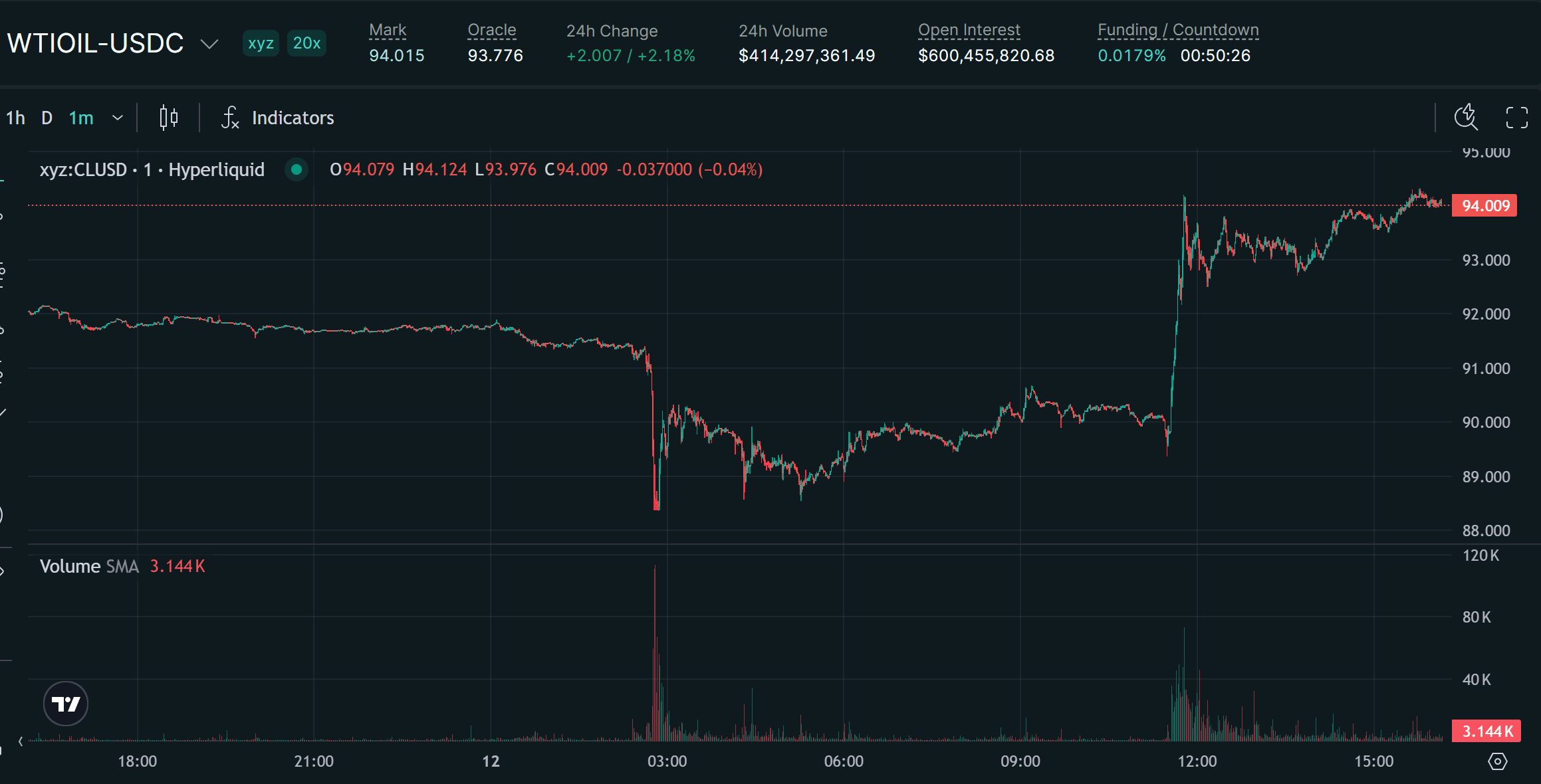
Hyperliquid's 24/7 access has turned it into a real-time venue for price discovery when traditional markets are closed. JPMorgan noted the trend in a recent report, saying demand for round-the-clock access to traditional assets is accelerating interest in decentralised exchanges.
Implications for investors
The failed talks inject fresh uncertainty into a market that had just begun pricing in de-escalation. WTI dropped roughly 10% on the week after the ceasefire was announced, but a resumption of hostilities could send it sharply higher again. For bitcoin and the rest of the crypto market, the picture is ambiguous once again. At the time of writing, prices have fallen a few percent across the digital asset market following the failed peace talks.
Bitcoin Devs Ship Quantum-Proof Prototypes as Threat Window Narrows
Quantum computers don't threaten bitcoin today, but a March Google Quantum AI paper showed they could crack its encryption in under nine minutes once the hardware catches up, potentially within three to five years. Around 6.9 million BTC in exposed address formats would be vulnerable, according to the same research.
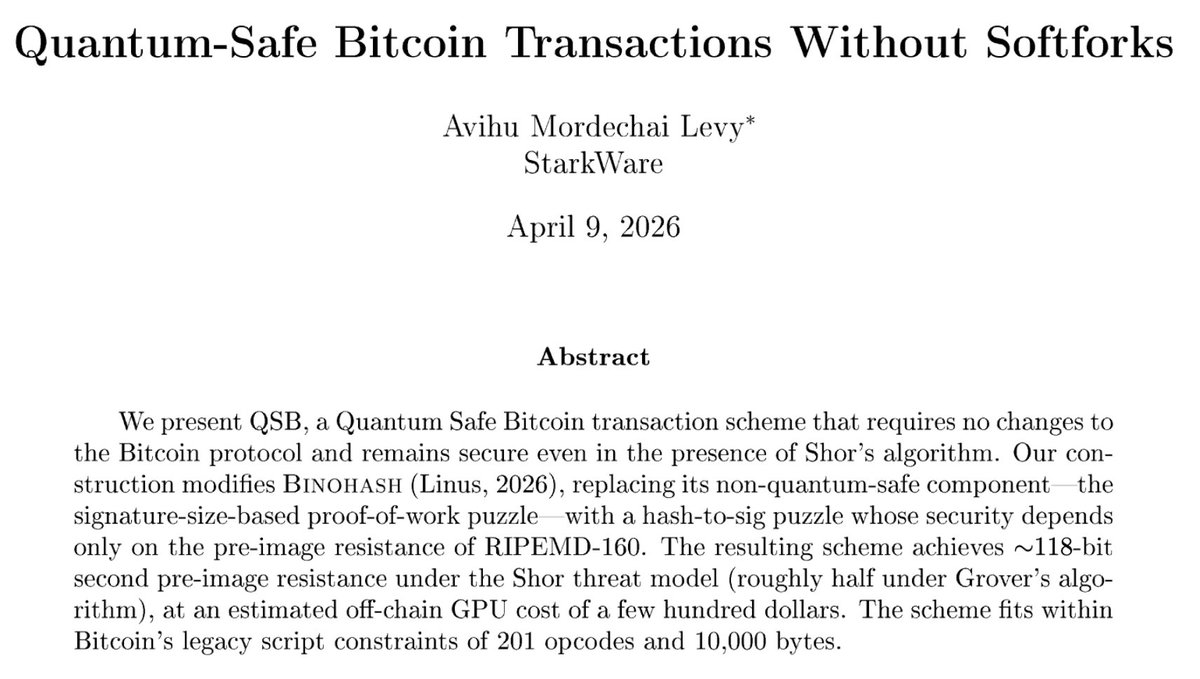
This week, two developers posted working prototypes to protect against that. Lightning Labs CTO Olaoluwa Osuntokun built a tool that lets wallet owners prove they control their funds without exposing private keys. StarkWare's Avihu Levy published a separate scheme called QSB that swaps Bitcoin's current signature method for one quantum computers can't break, without changing Bitcoin's rules. Both fit within the network as it exists today.
Implications for investors
Two independent teams shipped working code days apart, proof that Bitcoin's developer community treats quantum as an engineering problem that needs to be solved, not left to chance. Neither prototype requires a protocol upgrade to work. The threat is real but so is the response. For investors holding long-term positions, this is reassuring: the mitigation path exists and is being built now, well before the risk becomes live.
Bittensor Crashes 23% After Major Subnet Exits Over Centralisation Claims
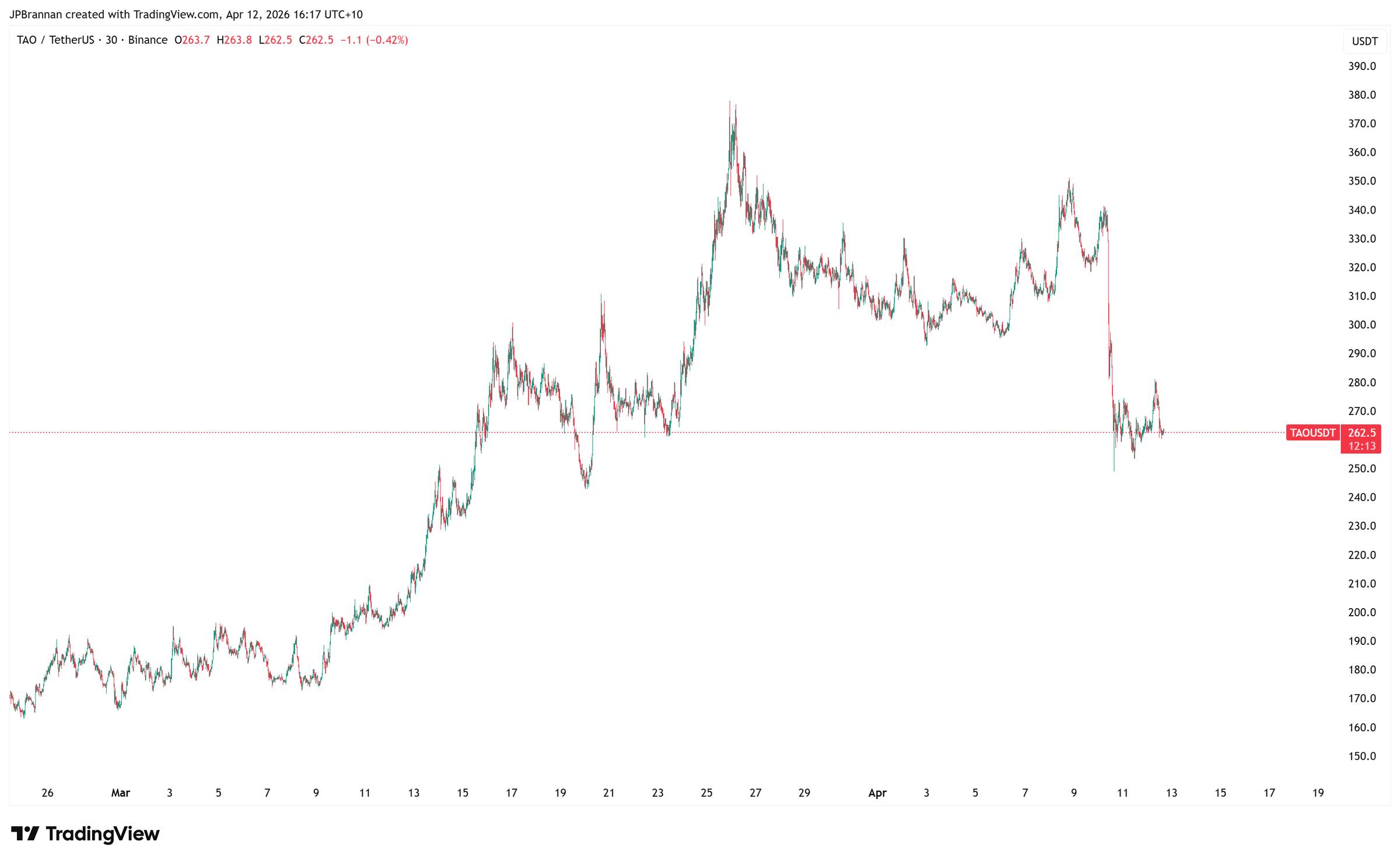
Bittensor's TAO token crashed 23% on 10 April after Covenant AI, one of the network's most prominent contributors, publicly exited and accused founder Jacob Steeves of centralised control. TAO fell from around US $340 to a low of US $254, erasing nearly US $900 million in market cap. Over US $9M in leveraged long positions were liquidated in the cascade.
Covenant AI operated several high-emission subnets (a subnet is a specialised network within Bittensor where participants are rewarded for contributing AI models and compute resources) and had built Covenant-72B, a decentralised large language model that was publicly acknowledged by both Nvidia's CEO and Anthropic's co-founder.
Its founder, Sam Dare, sold roughly 37,000 TAO (worth approximately US $10M) and described Bittensor's governance as "decentralisation theatre," claiming that Steeves "maintains effective control, resists any meaningful transfer of authority, and deploys changes unilaterally." Steeves has disputed several of the claims, stating that Dare deprecated his own channels and was deleting legitimate criticism from community members.
Implications for investors
TAO is one of the best-performing AI tokens this cycle, rallying over 100% from mid-March lows before the crash. The sell-off was sharp but still there are major catalysts on the horizon. The Grayscale ETP filing and has attracted institutional attention and we still hold a constructive outlook (albeit a very small allocation) to the token due to what we forecast as increased demand for open source and cheaper access to training AI models.
Until next week,
James Brannan
Managing Director
BlockByte
Sign up to receive the latest crypto trends, insights, and news.
.png)