.png)
Weekly Snapshot
- BTC: US $87,578 (-0.8%)
- ETH: US $2,929 (-1.7%)
- Crypto Market Cap: US $2.92T (-0.7%)
- Gold: US $4,532/oz (+4.6%)
- S&P 500: 6,929 (+2.0%)
- ASX 200: 8,762 (+2.0%)
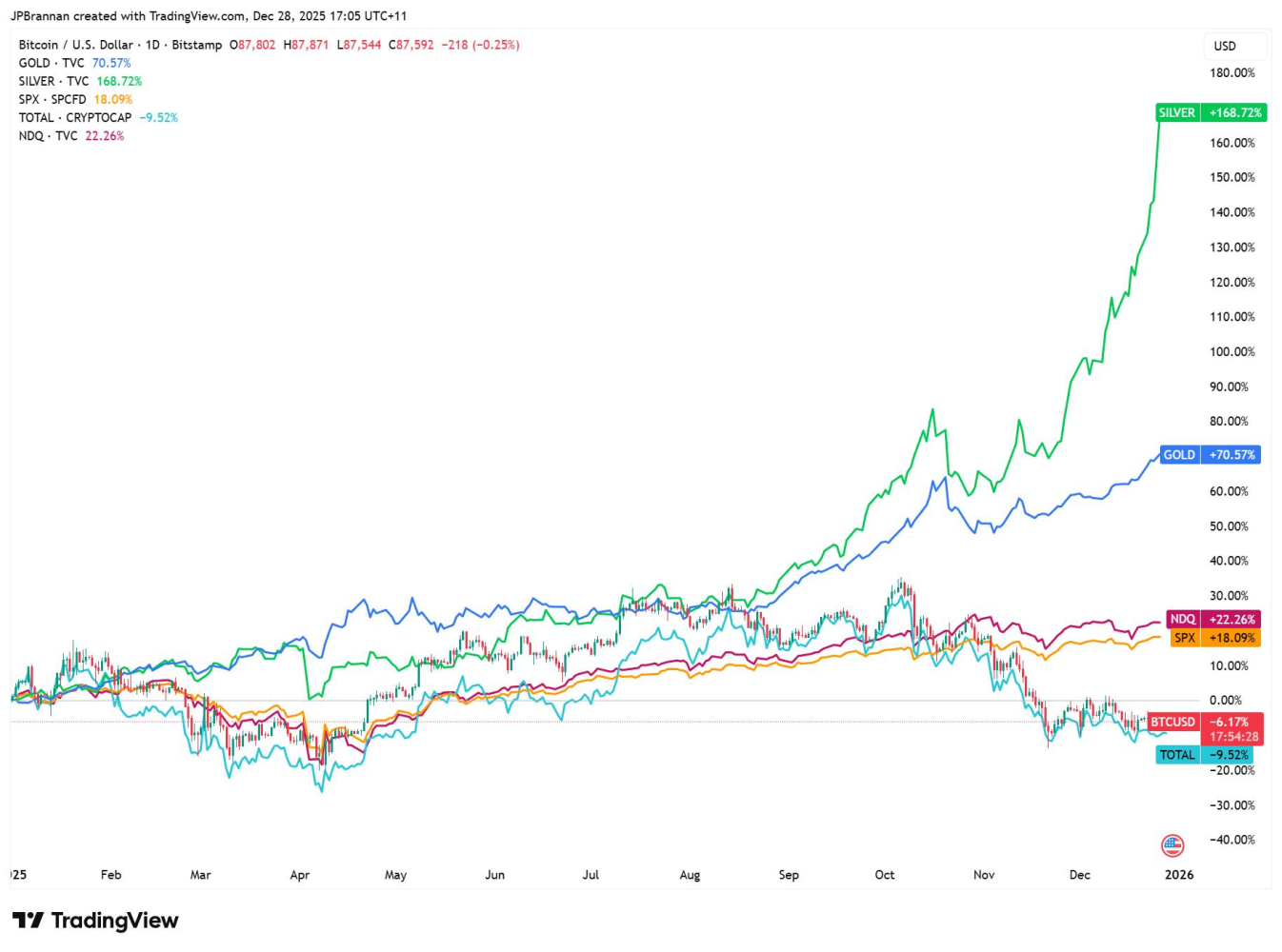
Chart: Year-to-date returns across silver, gold, Nasdaq, S&P500, Bitcoin and the overall crypto market
Executive Summary
- Gold and silver have had their largest year-to-date gains in decades, driven by a combination of factors including monetary debasement, central bank purchasing as well as increasing industrial demand, though the main driver is still investor-led.
- Equities have seen 3 years of double-digit gains, led by large tech stocks on the back of an artificial intelligence boom. In addition, US $400B of spending on AI infrastructure as well as over US $200B of corporate debt is helping boost profits of companies on the receiving end of that additional spending power (e.g., Nvidia).
- Bitcoin and crypto markets started the year well, recovering from the Trump tariff shocks in April to lead both commodities and equities up until August, however, continued selling pressure from long-term holders as well as institutional hedging strategies and the largest ever leverage wipeout has subdued market conditions and investor confidence in Q4.
Why are Gold & Silver Up?
The Debasement Trade - Investors have been talking about the unsustainable and rising US debt levels for decades now. However, we can see that in the last 5 years, total US debt and interest expense has grown exponentially. The US will end the year with over US $38 trillion in public debt and US $1.2 trillion in annual interest expense.
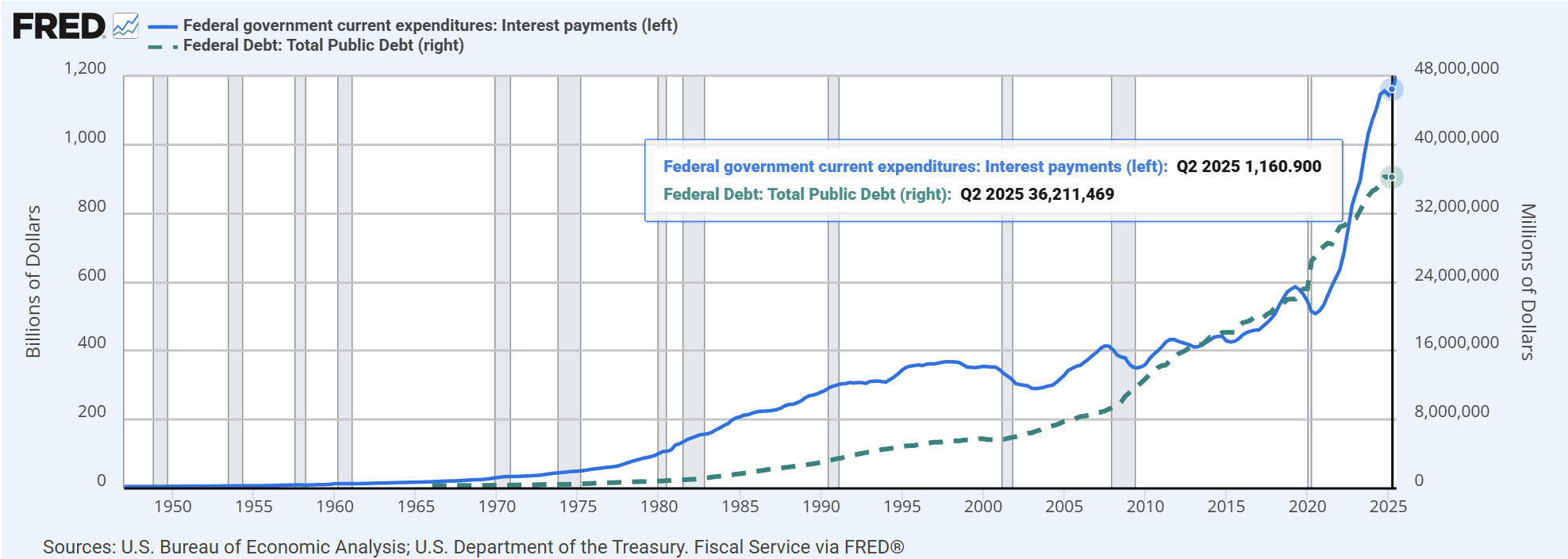
Both regular investors, institutions and foreign central banks have started to take note and hedge against the dollar by buying gold and silver.
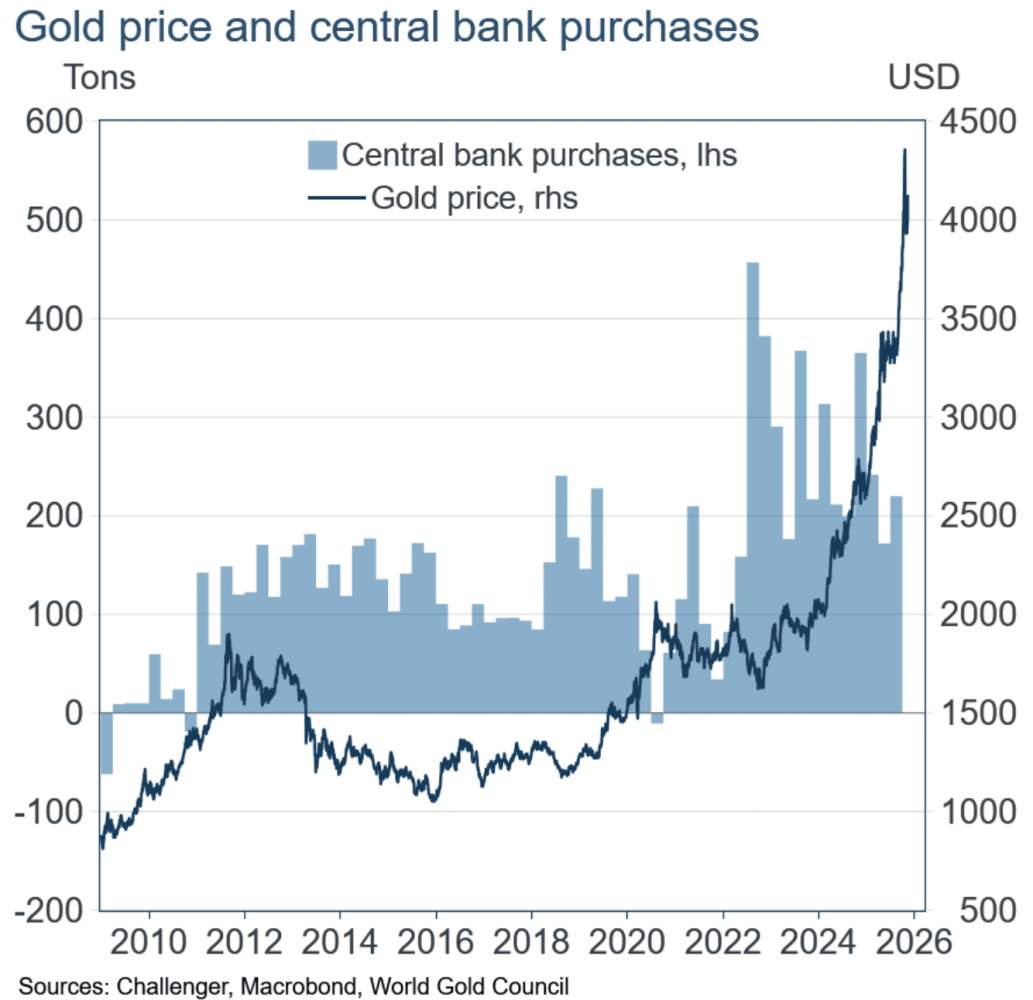
Geopolitics - Following Russia’s invasion of Ukraine in 2022, the U.S. and its allies froze roughly US $300 billion of Russian sovereign assets, a significant portion of which was held in U.S. treasuries.
While widely viewed as justified, the move had second-order consequences. It demonstrated that reserve assets held within the Western financial system are not politically neutral. For many nations, this changed the definition of a “safe haven”.
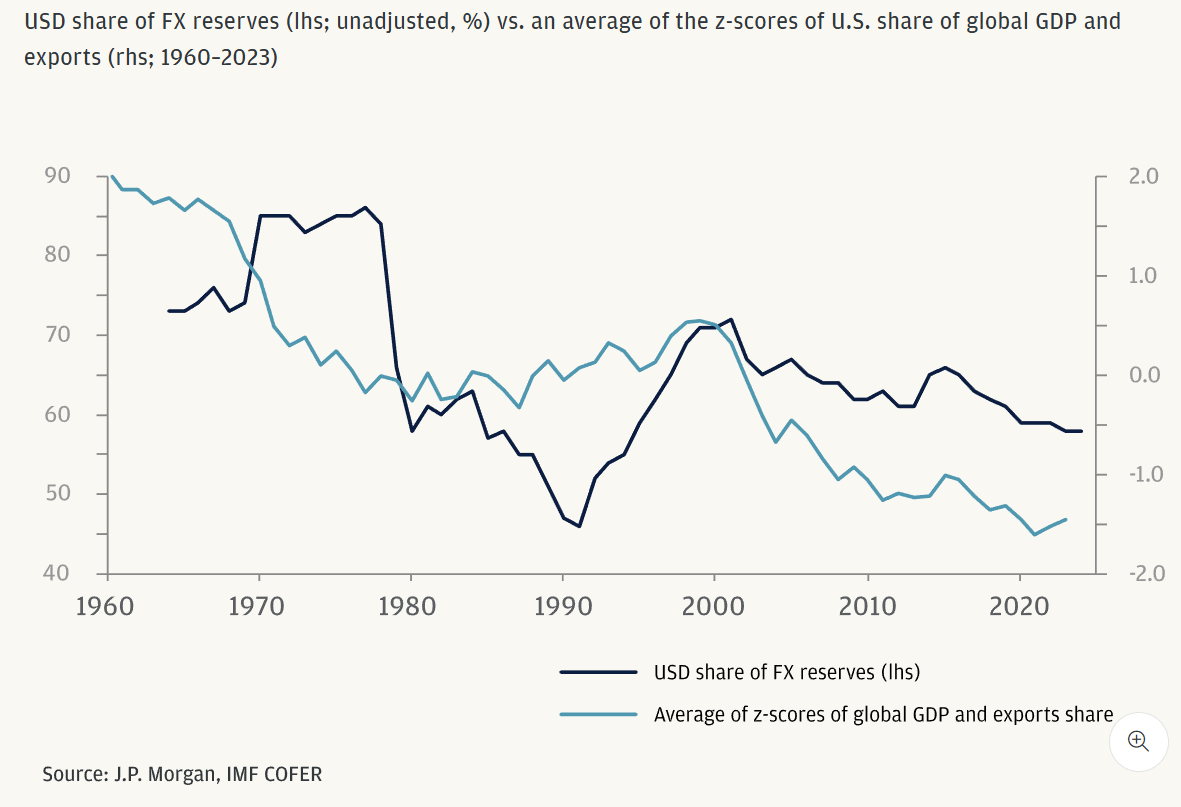
Since then, gold has quietly gained traction as a preferred reserve asset. At the same time, the US dollar’s share of global central bank reserves has continued its long-term decline from over 85% in the 1970s, to just under 58% today - JP Morgan.
Industrial Demand - Silver, in particular, has an additional tailwind. Industrial demand continues to grow due to its role in solar panels, electrification, and advanced electronics. While gold’s price is driven primarily by investment and reserve demand, silver benefits from both monetary and industrial use.
Adding a little gasoline to the price fire, from January 1st, 2026, China will require exporters to obtain government licenses before shipping silver abroad - effectively limiting the silver supply across international markets.
Why Are Stocks Up?
US equities have had another strong year, with the Nasdaq up ~22% year-to-date and the S&P 500 up ~18%. So what's driving stocks higher this year?
AI Capital Expenditure - While not the only reason, AI CAPEX from just five “hyperscalers” (Alphabet, Meta, Microsoft, Amazon, and Oracle) will total $399 billion this year and rise to over $600 billion in the years to come.
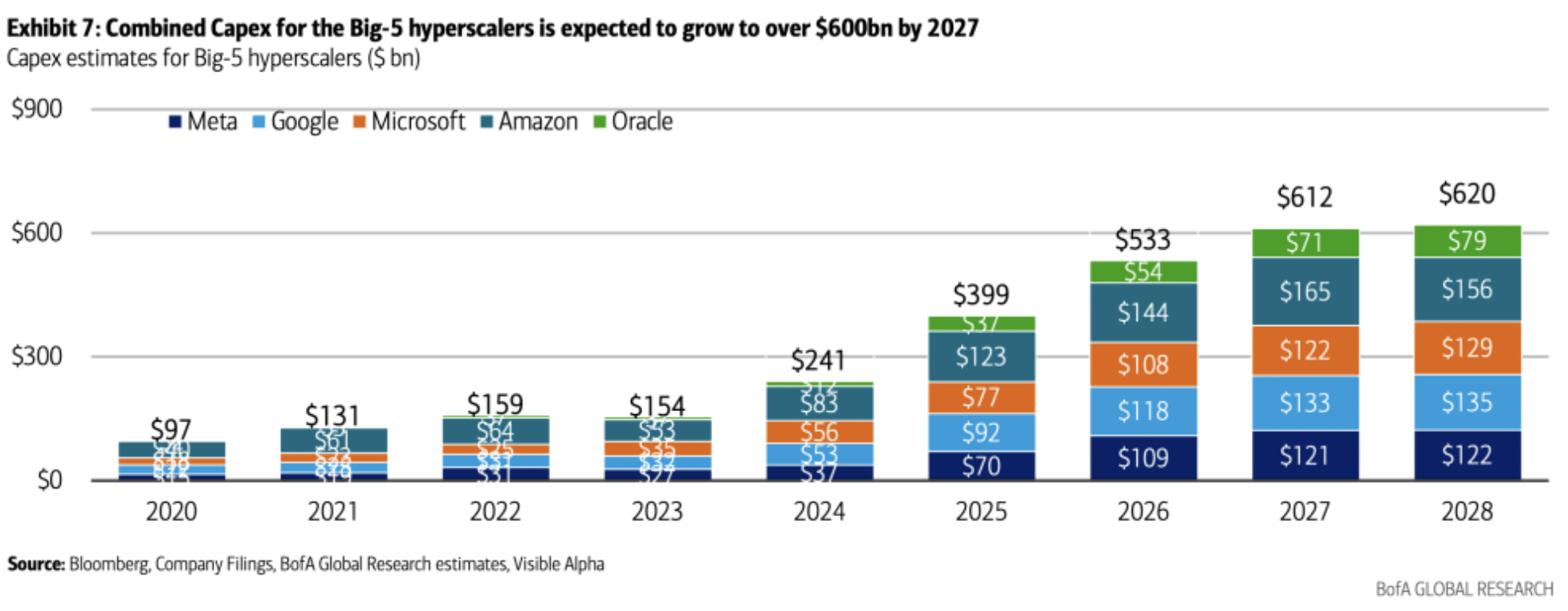
Large technology companies are deploying unprecedented amounts of capital into data centres, chips, and software infrastructure. These firms are exceptionally well capitalised, holding hundreds of billions of dollars in cash and liquid assets, allowing them to fund growth internally without stressing balance sheets.
Absent this CAPEX cycle, broader equity returns would likely have been far more modest.
Corporate Debt Boom - Increasingly, that AI CAPEX will likely be funded by debt. The big tech companies have such healthy cashflow and robust balance sheets that it’s easy for most of them to add debt without harming their bottom lines.
That debt is already breaking records. AI-related debt crossed $200 billion in 2025, more than doubling last year and is expected to grow further in 2026, fueling surging profit margings and stock prices for companies like Nvidia.
Why are Bitcoin and Crypto Down?
Long-term holder selling - The first driver has been persistent selling from long-term holders. After a multi-year rally and new all-time highs earlier in the year, profit-taking has been consistent with historical four-year cycle behaviour.
Institutions are Reducing Price Volatility with Hedging Strategies - At the same time, institutional market structure has fundamentally changed how crypto trades. The growth of spot ETFs, futures, and options markets has led to widespread hedging activity. Investors are increasingly pairing spot exposure with put and call options, which dampens volatility and suppresses large directional moves.
This has contributed to one of the most subdued volatility regimes Bitcoin has seen late in a cycle.
Importantly, this has not been a demand collapse. Buying activity has remained historically high, and Bitcoin’s realised market capitalisation continues to make new highs, an indication that capital committed to the network remains strong.
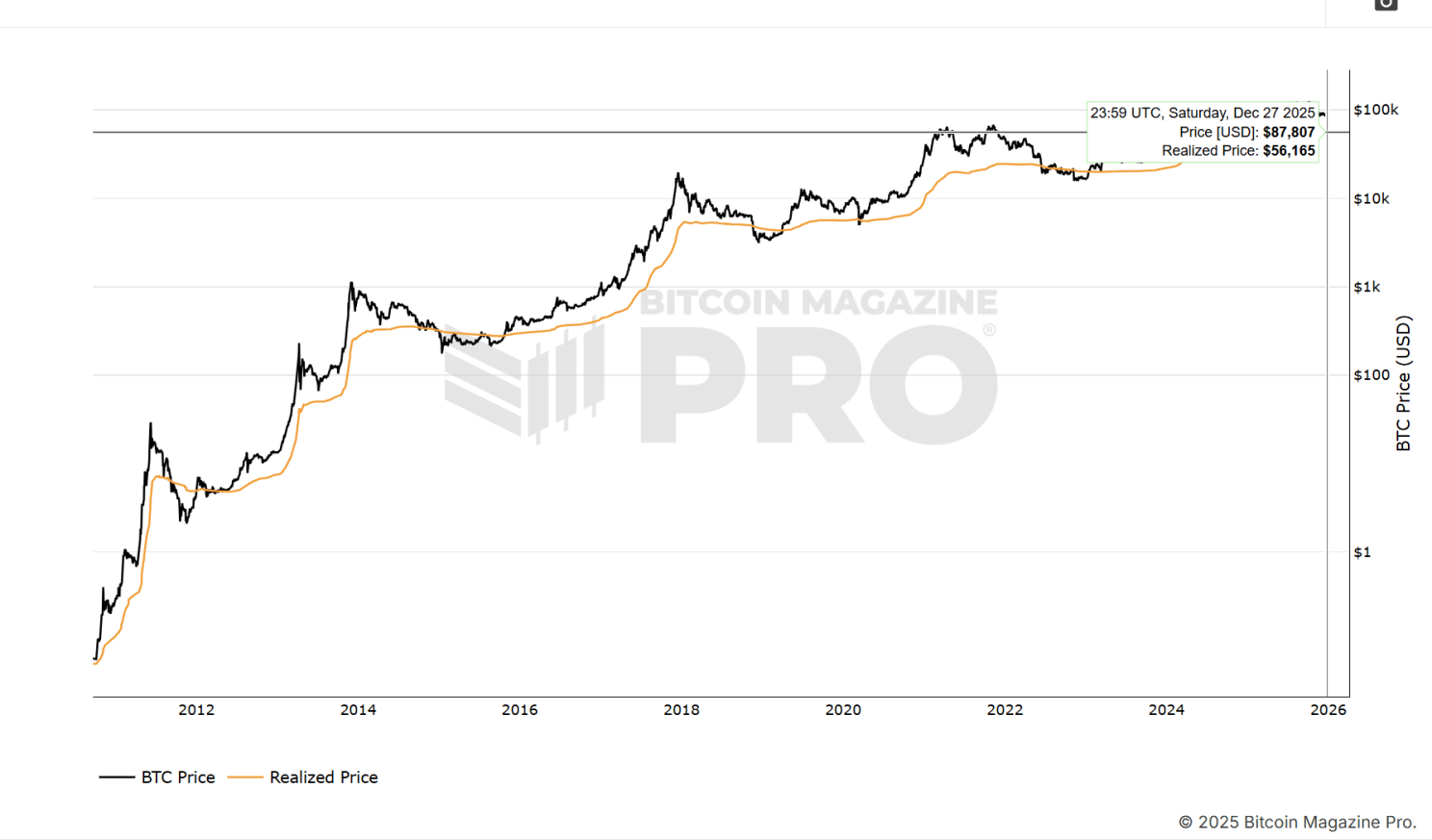
The issue has been balance: heavy buying matched by equally heavy selling.
Investor Attention and Capital has gone to AI - Finally, crypto has faced competition for attention and capital. Artificial intelligence has emerged as the dominant growth narrative of the cycle, capturing both mindshare and investment flows.
Crypto is no longer the “new frontier” trade, and in the absence of expanding liquidity, narratives alone have not been enough to drive prices higher.
The net result is a market that appears quiet and underwhelming on the surface, but one that is steadily becoming more institutional, more hedged, and more structurally mature.
Looking Ahead
Should liquidity conditions ease in the US, driven by lower rates, and increasing levels of fiscal stimulus following the end of the Fed's QT program, it could set up favourable conditions for a recovery in digital assets.
We are cautiously optimistic heading into 2026, and more constructive when looking at a longer-term view given the regulatory, institutional and technological developments as well as the fiscal policies that favour more, not less adoption of digital assets over time.
A famous quote comes to mind when we look ahead to 2026 for those holding digital assets during this period of consolidation:
“The big money is not in the buying and selling, but in the waiting.” - Charlie Munger.
Until next week,
James
James Brannan
Managing Director
BlockByte
Sign up to receive the latest crypto trends, insights, and news.
.png)