.png)
Weekly Snapshot
- BTC: US $80,350 (+2.7%)
- ETH: US $2,317 (+0.6%)
- Crypto Market Cap: US $2.77T (+2.9%)
- Gold: US $4,713/oz (+4.4%)
- S&P 500: 7,398 (+1.5%)
- ASX 200: 8,744 (+2.4%)
- Brent oil US $104 (-5.8%) / WTI oil US $91.5 (-5.5%)
Executive Summary
- Banking Committee members and crypto company representatives may have reached a compromise on the stablecoin yield provisions within the CLARITY Act - a mark-up session penned for later this week could head to the Senate later this year before being signed into law. This could be a major market catalyst if the mark-up passes this week.
- Spot Bitcoin ETFs pulled in roughly US $1B in net inflows over the week, the first billion-dollar week since January, with BlackRock's IBIT capturing the bulk and BTC briefly touching US $82,000.
- Michael Saylor has formally announced that Strategy will be open to selling down some of its bitcoin holdings in order to fund the dividend payments on its preferred share obligations. Saylor has stated that so long as bitcoin appreciates 2.3% per year they'll be able to meet dividend repayments indefinitely based on capital gains on their bitcoin.
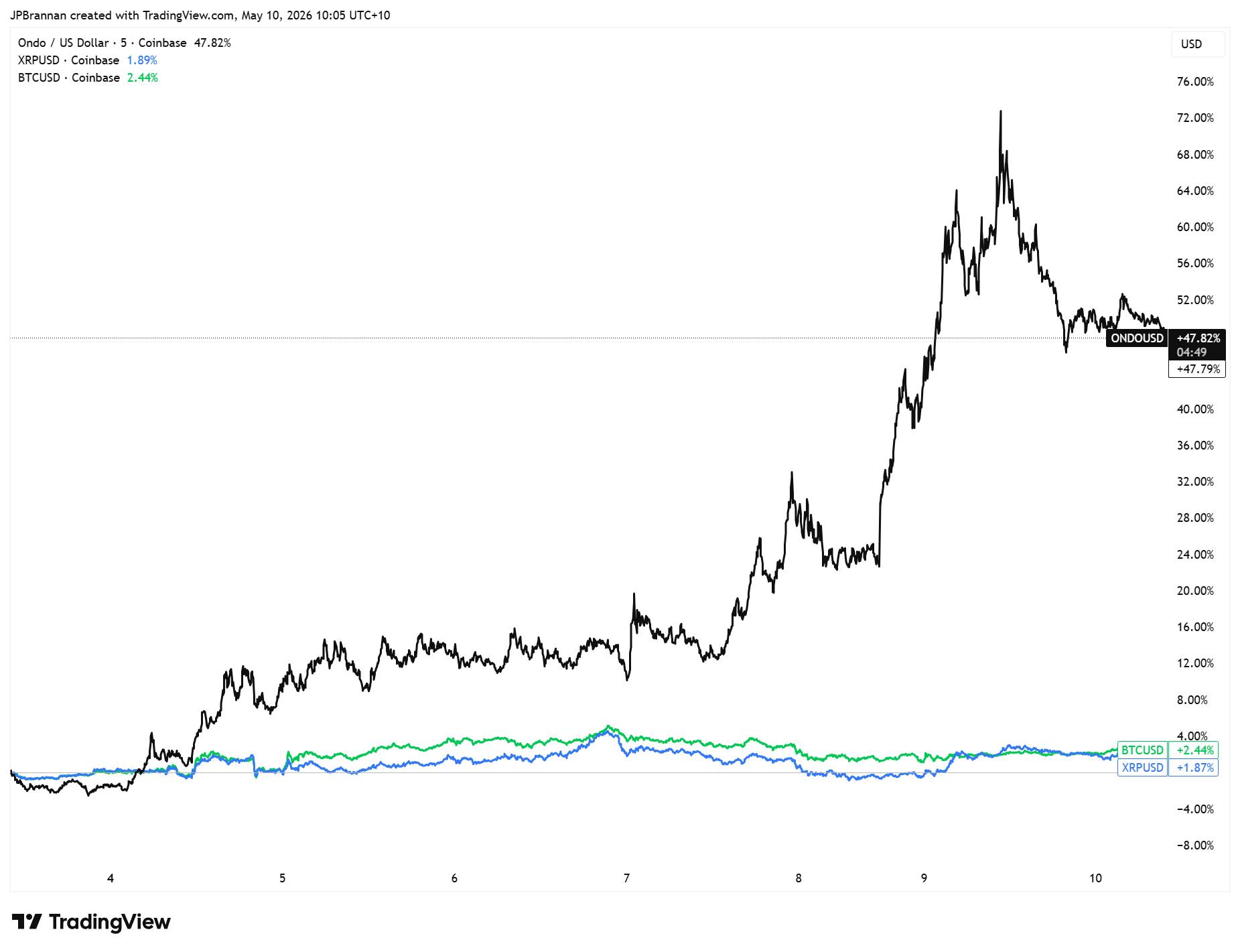
- Ondo's token spiked 72% this week before retracing - the move was driven by the first cross-border treasury redemption pilot program involving tokenised US treasuries. The pilot program used the XRP ledger, JP Morgan's Kinexys system and the Ondo token. Notably, XRP's blockchain but not their token was involved in the transaction.
Why This Week Could Be a Major One in Digital Assets
This week could be big one in digital asset markets. After more than three months of stalemate, Senators working on the long-awaited CLARITY Act are believed to have reached a compromise between bank lobbyists and crypto companies on stablecoin yield.
The banks don't want crypto firms to be able to offer interest on stablecoins "economically or functionally equivalent" to a bank deposit. The reason why is clear - they could lose significant deposits as crypto companies are offering interest rates of between 3-5% compared to the US bank deposit average interest of 0.6%.
Brian Moynihan, Bank of America's CEO, warned that up to US $6 trillion in deposits could shift to stablecoins if Congress does not restrict interest-bearing stablecoins. However, crypto companies will be able to offer rewards based on user activity. An example might be for spending or trading X amount of dollars per month, you get Y% of interest on your account.
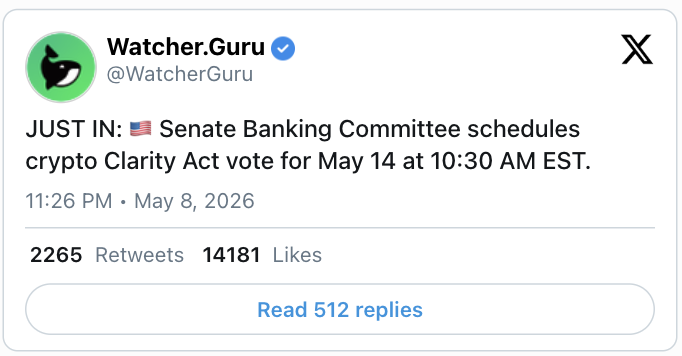
Coinbase, Circle and the Blockchain Association quickly endorsed the deal; Coinbase CEO Brian Armstrong responded with "Mark it up." The Senate Banking Committee has now confirmed a formal markup hearing for Thursday 14 May. Committee members then have another chance to edit the draft bill and vote to decide whether the new draft is sent to the Senate. If it passes there eventually the bill goes to the President's desk for signing into law.
Implications for investors
This is the most consequential US crypto market structure development of the year. The CLARITY Act would establish a federal framework dividing oversight between the SEC and CFTC, replacing enforcement-driven rulemaking with statutory categories, the absence of which has held back larger institutional capital for years.
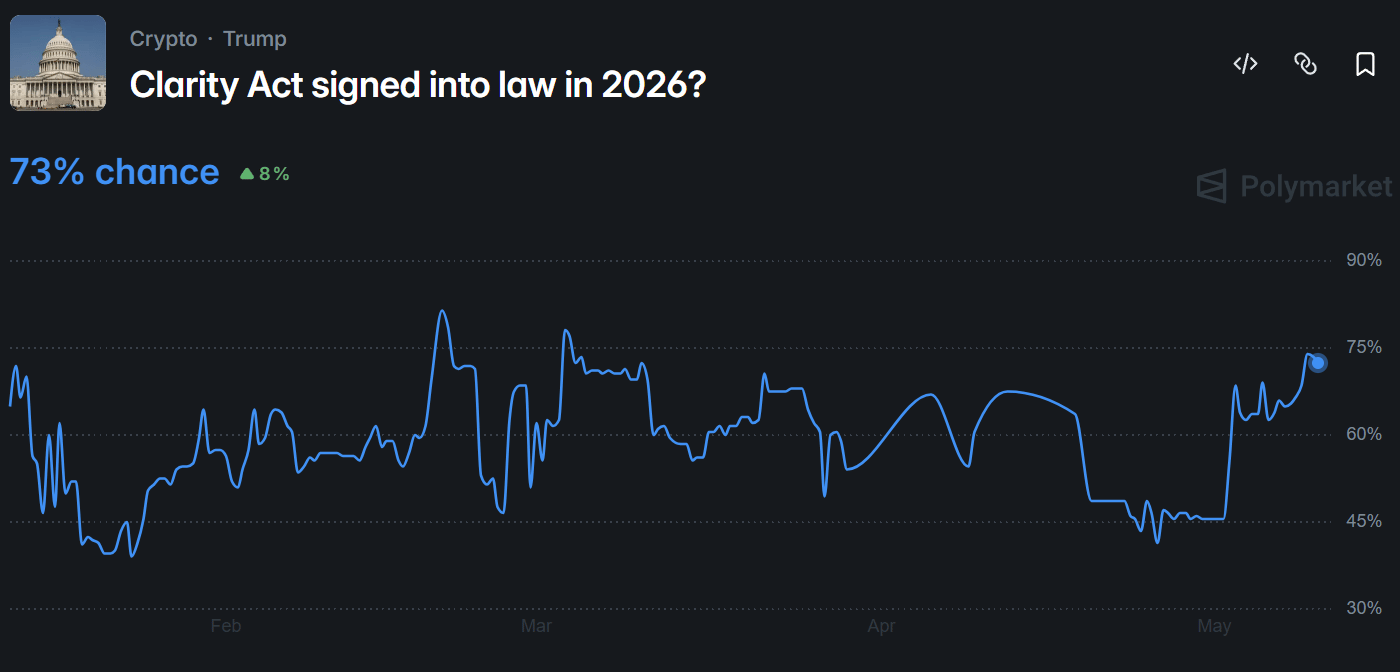
Polymarket odds of the CLARITY Act being signed into law in 2026 have jumped from 45% to 73% at the time of writing.
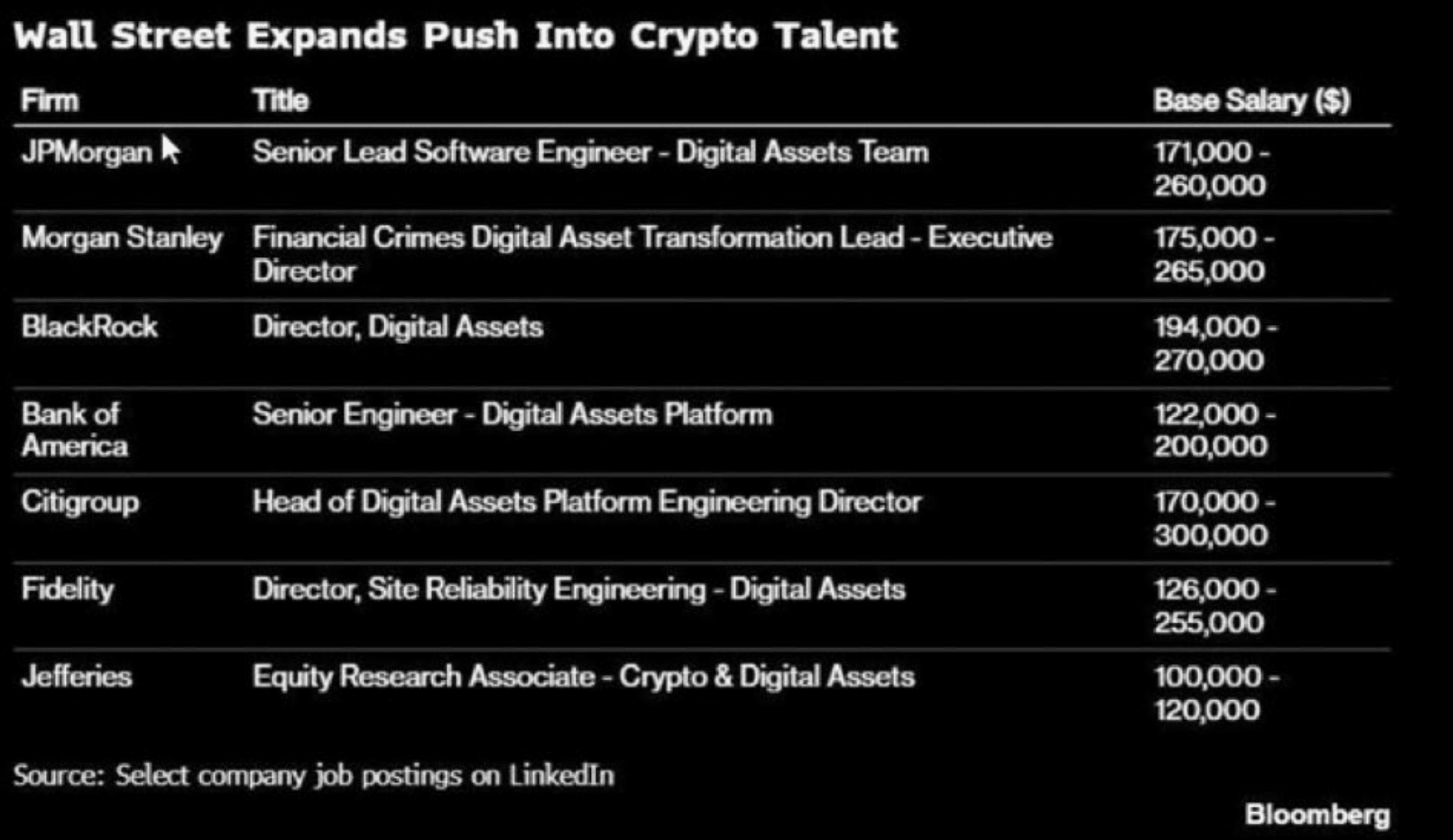
Bloomberg have also noted that major banks have been expanding their job advertisements for digital asset related roles, adding to speculation that the bill is expected to pass through the mark-up.
The Senate draft must still pass the full chamber under a 60-vote threshold and reconcile with the House version, with the legislative window narrowing as the November midterms approach. Banking trade groups are still pushing back on the yield carve-outs, while Senate Democrats remain focused on conflict-of-interest provisions targeting the Trump family's crypto ventures, both of which could derail the timetable.
If the bill passes through the mark-up and towards the Senate, we suspect that funds could start to flow back into bitcoin and high quality digital assets.
Bitcoin ETFs roar back, first US $1B week since January
US spot Bitcoin ETFs attracted roughly US $1B in net inflows in the week ending 8 May, the first billion-dollar week for the category since January. BlackRock's IBIT captured the lion's share, pulling in around US $721M over three trading sessions, including a single-day inflow of US $335M on 4 May.
Bitcoin ETF Net Inflows
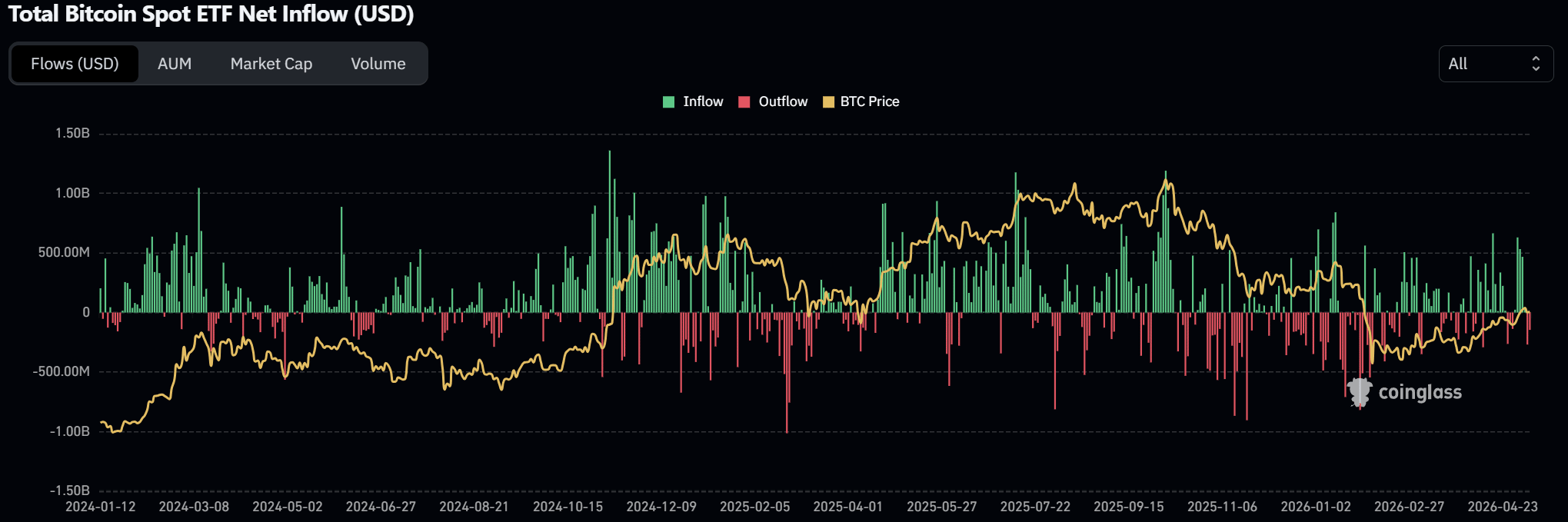
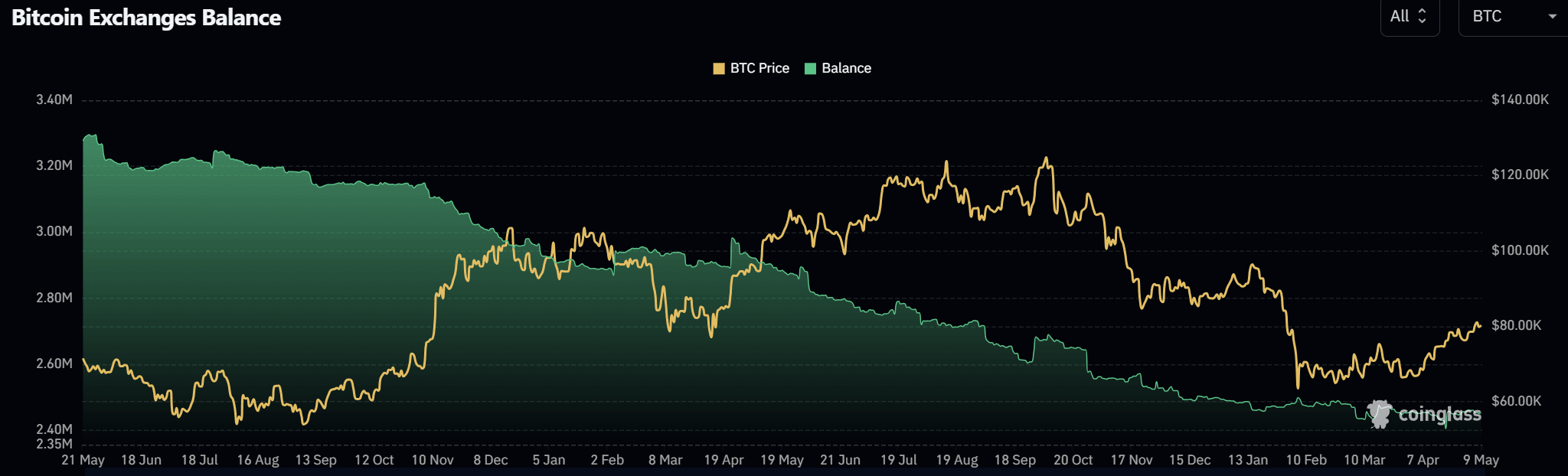
Bitcoin briefly tagged US $82,000 on 6 May before fading back to the US $79,000 to US $80,000 range by week's end. The recovery follows April's US $2.44B in net inflows, the strongest month since October 2025. ETFs absorbed roughly nine times the amount of newly mined Bitcoin during a nine-day stretch in April, while exchange reserves sit near a seven-year low.
Bitcoin Balance on Exchanges Hits 7-Year Low
Implications for investors
The return of consistent ETF demand is the cleanest read on institutional positioning, and the data points to genuine re-engagement after four months of net outflows. With BlackRock's IBIT now holding over 800,000 BTC, roughly 3.8% of total supply, the spot ETF complex has become a structural rather than speculative bid. The contrarian texture: Bitcoin is still trading roughly 36% below its US $126,000 October all-time high, and the late-week pullback from US $82,000 shows the rally remains vulnerable to macro headlines. A failed Iran deal or a hawkish Fed surprise (Powell's term ends 15 May, with Kevin Warsh expected to take over) could quickly reverse flows. The signal is that institutional appetite has returned. Whether it sustains depends on whether the macro backdrop cooperates.
Saylor breaks "never sell" pledge as STRC dividends mount
On Strategy's Q1 2026 earnings call on 5 May, Michael Saylor publicly opened the door to selling some of the company's Bitcoin to fund dividend obligations, ending years of "never sell" messaging. "We will probably sell some bitcoin to pay a dividend just to inoculate the market and send the message that we did it," Saylor told analysts. You can watch the latest interview from Saylor himself below:

Strategy holds 818,334 BTC at an average cost of US $75,537, against roughly US $1.5B in annual dividend obligations across its preferred share classes (STRK at 8% and STRC at 11.5%). STRC alone, the largest preferred stock by market cap globally, has scaled to US $8.5B since launch nine months ago and accounts for around US $978M of that annual bill.
At US $80,000 BTC, covering the full obligation through sales would equate to roughly 18,500 BTC per year, or about 2.3% of holdings. Strategy reported a US $12.54B Q1 GAAP net loss; MSTR fell 4% in after-hours trading and Bitcoin slipped below US $81,000 on the news.
Implications for investors
This is a structural shift in the largest corporate Bitcoin treasury model, not just a rhetorical one. Saylor's framing is that Strategy is moving from pure accumulation to a "digital credit" capital cycle, where preferred share issuance funds Bitcoin purchases and selective Bitcoin sales fund the dividend. The maths only works if Bitcoin appreciates above roughly 2.3% per year, and if STRC continues to attract yield-seeking capital. Both assumptions look reasonable today.
Tokenised US Treasuries settle cross-border in under five seconds
On 6 May, Ondo Finance, Ripple, JPMorgan's Kinexys and Mastercard completed the first near real-time cross-border, cross-bank redemption of a tokenised US Treasury fund. Ripple redeemed a portion of its OUSG holdings (Ondo's Short-Term US Government Treasuries token) on the XRP Ledger; Mastercard's Multi-Token Network routed the settlement instructions; Kinexys debited Ondo's blockchain deposit account at JPMorgan and wired US dollars to Ripple's Singapore bank account.
The full sequence settled in under five seconds, outside traditional banking hours. By comparison, conventional cross-border correspondent banking settlement typically takes one to three business days. JPMorgan's Kinexys platform has now processed over US $3T in cumulative transactions, and the total tokenised US Treasury market sits near US $15B, against the roughly US $30T traditional Treasury market.
ONDO token spiked over 72% on the week before retracting, still up 47.8% since last Sunday.
ONDO is up 47.8% on the week
Implications for investors
XRP barely moved on the news, gaining around 2% to US $1.42, which will come as a disappointment to XRP holders. The pattern is clear and worth understanding: institutions use the XRP Ledger for settlement infrastructure, but settle in stablecoins or other tokens rather than XRP itself. The demand for the XRP ledger is real; the value accrual to XRP holders is harder to identify. The bigger investment signal is in the tokenisation theme broadly.
Until next week,
James
Sign up to receive the latest crypto trends, insights, and news.
.png)